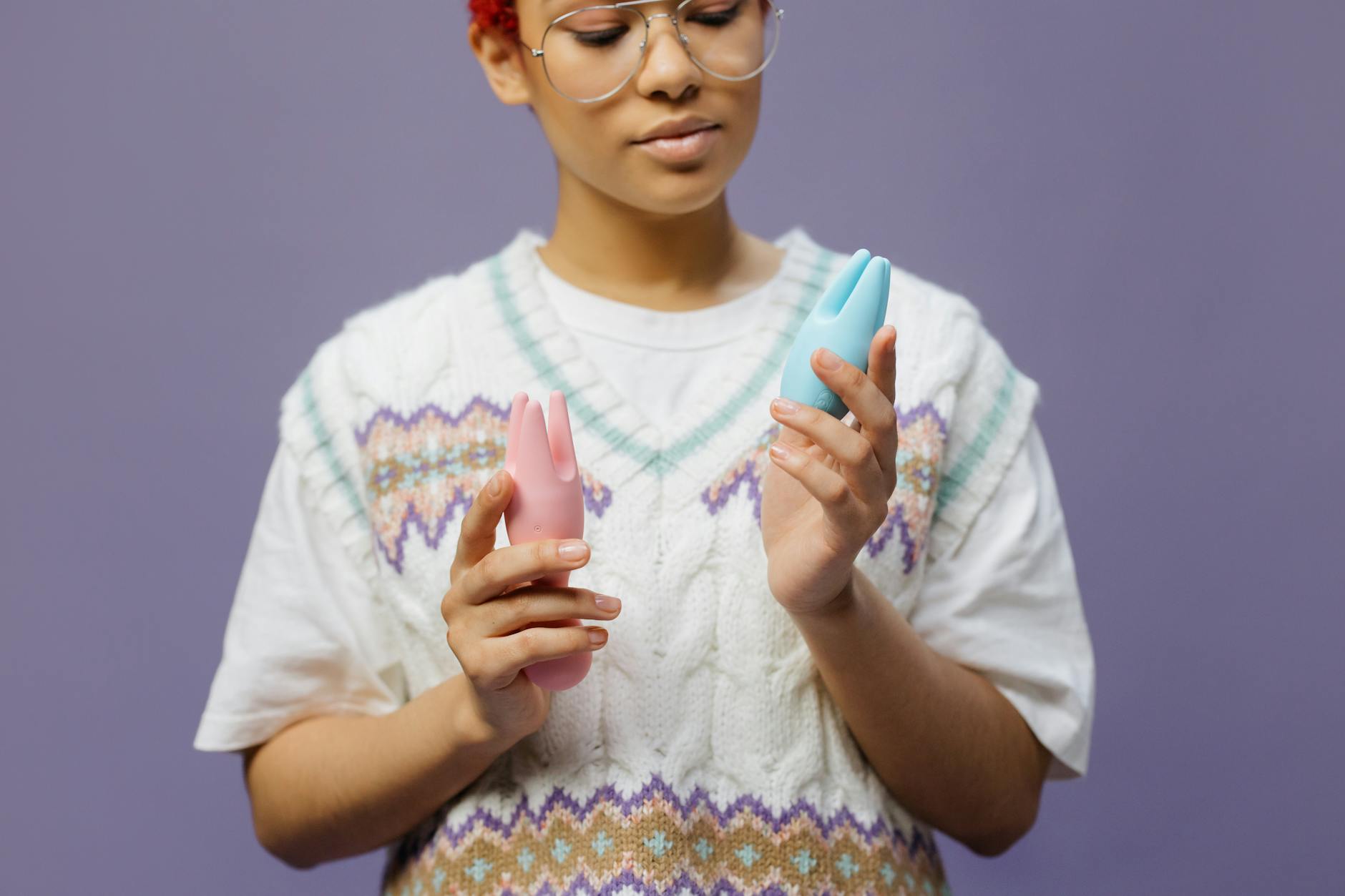
When you stop hormonal contraception, your clitoris wakes up
Let's be real: hormonal birth control changes how you feel pleasure. Not in a way anyone warns you about. Your gynecologist doesn't say "the pill will make your clitoris less responsive." But for many people, that's exactly what happens. And then when you quit. Everything shifts again.
Your lemon clitoral vibrator might suddenly feel too intense, or weirdly numb. Your arousal pattern changes. The timing of your orgasm shifts. Your partner might notice you're different during sex. None of this is imaginary, and none of it means something's wrong with you. Your hormones are simply recalibrating.
How hormonal contraception affects clitoral sensitivity
Hormonal contraception works by suppressing ovulation, which means it suppresses the normal cycling of estrogen and testosterone. Those aren't just fertility hormones. They're neurotransmitters. They affect blood flow, tissue thickness, nerve sensitivity, and your brain's arousal response.
Specifically, hormonal birth control typically reduces testosterone. Testosterone is a major driver of clitoral sensitivity and desire in all people with vulvas. It's not a male hormone. It's essential for sexual response in women and non-binary folks too.
When you take hormonal contraception, your baseline testosterone drops. This means your clitoris is less engorged during arousal, less responsive to touch, and requires more direct stimulation to reach orgasm. Many people on the pill or patch describe needing stronger vibration, longer warm-up time, or more precise positioning to feel pleasure.
That's why lemon vibrators on lower settings sometimes feel completely ineffective when you're on hormonal contraception. You're not broken. Your clitoris simply isn't getting the hormonal signal to engorge and respond as quickly.
What happens in the first month after you quit
Your hormones don't shift instantly. The synthetic hormones from your pill or patch take a few days to clear your system, but your body doesn't immediately flood with its own hormones either. It takes time for your ovaries to wake up and start producing testosterone and estrogen again.
This is why the first month off hormonal contraception feels chaotic. Your clitoral sensitivity might swing wildly. One day your lemon vibrator feels too intense on setting two. Three days later, setting five isn't quite enough. You might notice your arousal is faster and more intense. Or you might feel a weird flatness that's different from while you were on the pill.
This is normal. Your nervous system is adjusting. Your clitoris is engorging with more blood. The tissues are responding to naturally produced hormones again. This adjustment period typically lasts four to eight weeks.
The testosterone rebound and hypersensitivity
Here's what a lot of people don't expect: you might actually become more sensitive than you ever were. Some people who quit hormonal contraception report that their clitoris is almost too sensitive for direct touch. A lemon vibrator that felt perfect while on the pill might feel overwhelming now.
This is called the testosterone rebound. After months or years of suppressed testosterone, your body sometimes overcorrects. Your clitoral nerve endings are firing more actively. Blood flow is richer. Arousal happens faster.
The good news is that lemon vibrators are uniquely helpful here. The suction-based stimulation of a lemon vibrator doesn't rely on direct friction the way traditional vibrators do. Suction spreads the stimulation across the whole clitoral structure, not just the tip. This makes it easier to manage if you're experiencing hypersensitivity. You can use lower suction settings or start with gentler pulse patterns.
When ovulation returns, everything shifts again
If you have a regular menstrual cycle, your hormones will cycle too. And that means your clitoral sensitivity will cycle as well.
During the follicular phase (roughly days one through fourteen of your cycle), estrogen is climbing and testosterone is lower. You might feel less sensitive. Your lemon vibrator might need to go on a higher setting. Arousal takes longer.
During the luteal phase (roughly days fourteen through twenty-eight), progesterone rises and your testosterone is typically higher. You might feel more sensitive, orgasm more easily, and find that lower settings on your lemon clitoral vibrator feel more satisfying. Some people find their clitoris is almost too sensitive for direct stimulation during this window.
This cyclical responsiveness is completely normal and it's one of the things people miss the least about hormonal contraception. It can feel chaotic at first. After a few months, you start to expect it.
Dopamine, desire, and the bigger picture
Hormonal contraception also affects dopamine, the neurotransmitter responsible for desire and pleasure-seeking. Many people on the pill report lower baseline sexual desire, not just reduced clitoral response. When you quit, desire often returns with a rush.
But here's the thing: sometimes desire doesn't return the way you expected. Maybe you quit the pill expecting to feel wildly horny and instead feel quietly interested. Maybe your desire is the same but it's directed differently. Maybe you notice you want different kinds of touch than you used to.
This is where a partner (if you have one) becomes part of the conversation. Your shift in desire might be real. It might also be a symptom of stress, work, relationship dynamics, or just life. Blaming it all on the pill or crediting it all to hormone recovery is tempting but usually incomplete.
Working with your lemon vibrator through the transition
Four practical shifts that help most people:
First, give yourself grace with your settings. If you used to love setting five and now setting two feels overwhelming, that's information, not failure. Your body is responding differently. Your vibrator didn't change. You did.
Second, lean into the lemon vibrator's range. Most people are surprised by how much the suction intensity and pulse patterns matter. Spend a week on setting one just exploring. You might find that the precise stimulation actually works better for your newly sensitive clitoris than the raw power you relied on while on the pill.
Third, pay attention to your cycle if you have one. Track the days when you feel most responsive and the days when you need more time to warm up. This isn't obsessive. It's the same practice you'd use to notice when your mood shifts or when you need more sleep. Your body is giving you data.
Fourth, be patient with your partner if you have one. If you were on hormonal contraception for years, your partner's muscle memory for your pleasure is built around that version of you. Your arousal timing has changed. Your sensitivity map has shifted. This is an opportunity to rediscover each other.
The timeline you can actually expect
Week one to two: Synthetic hormones clear. Your clitoris might feel exactly the same or slightly different. No dramatic change yet.
Week three to eight: Your ovaries are starting to produce hormones again. Sensitivity swings. Arousal patterns shift. This is the wildest part. Some days your lemon clitoral vibrator feels perfect. Other days it doesn't land right.
Month three: Your cycle is typically returning (though irregular cycles are normal for several months). Your sensitivity is starting to stabilize. You're getting familiar with your new baseline.
Month six: If you have a regular cycle, you're probably starting to notice the pattern. You know which weeks you want more intensity and which weeks you want gentler stimulation. Your lemon vibrator is recalibrated.
A year in: You've completed several full cycles. You know your body's pattern. You're not comparing yourself to the pill version of you anymore. You're just enjoying the version you are now.
Not everyone follows this timeline exactly. Some people see changes in weeks. Some take months. Stress, sleep, relationship status, health changes, and a dozen other factors influence how quickly your hormones stabilize.
When to check in with a clinician
If your period hasn't returned after six months off hormonal contraception, mention it to your gynecologist. Amenorrhea can have different causes and it's worth investigating.
If you've always been able to orgasm and suddenly can't, that's also worth discussing. Sometimes it's just the hormone transition. Sometimes there's something else going on.
And if you find yourself comparing yourself to the pill version of you months in and feeling worse, it might be worth talking to a therapist. Sometimes the narrative becomes "I was better off on hormonal contraception" when actually what's happening is grief about the body you had versus the body you have now. Both feelings can be real.
The good part nobody tells you
Most people who quit hormonal contraception report that their pleasure eventually becomes deeper and more varied. The clitoral response is richer because it's not muted. The orgasms often feel more intense because your whole body is participating, not just a suppressed clitoral response.
Your lemon vibrator might feel completely new in month four. Not because it changed. Because you changed. And that's the whole point.
People also ask
How long does it take for clitoral sensitivity to return after stopping the pill?
Most people notice changes within two to four weeks, but full recalibration typically takes four to eight weeks. For some, it takes several months. Your clitoris doesn't have an on-off switch. It gradually starts responding to natural hormone production again. The timeline depends on how long you were on hormonal contraception, your baseline hormone sensitivity, stress levels, and overall health. Tracking your experience with your lemon clitoral vibrator over a few weeks can help you see the pattern.
Can hormonal contraception permanently change your clitoris?
No. Hormonal contraception suppresses your natural hormone production, which changes clitoral response, but it doesn't permanently alter the structure or function of your clitoris. Once you stop, your hormones return and your clitoral sensitivity returns with them. Some people who were on hormonal contraception for a decade report that it takes longer to recalibrate. But the recalibration happens.
Why does my clitoris feel numb after stopping hormonal contraception?
This isn't actually numbness. It's usually lower baseline sensitivity. If you were on hormonal contraception for years, your clitoris adapted to lower testosterone. When you quit, it takes time for the nerve endings and blood vessels to respond to higher hormone levels again. This often feels like numbness initially because you're comparing it to the heightened sensitivity that sometimes arrives four to six weeks later.
Will my lemon vibrator feel different throughout my cycle?
Most likely yes, especially during the first few cycles after stopping hormonal contraception. The shift is usually subtle. You might notice that certain settings feel better on some days than others. This stabilizes once your cycle becomes regular. Some people continue to notice small shifts throughout their cycle long-term, which is completely normal. It's the same sensitivity cycling that happens in people who never used hormonal contraception.
Is it normal to feel less sexual desire after quitting hormonal contraception?
Yes and no. Many people expect their libido to skyrocket after quitting the pill, but instead they feel the same or less interested in sex. This can be due to lingering hormonal adjustment, but it's often due to other factors like stress, relationship dynamics, work pressure, or life changes. The fact that you quit hormonal contraception doesn't automatically increase desire. It removes one thing that was suppressing it, but it doesn't create desire where other obstacles exist. Give yourself a few months to settle, and if desire remains low, consider whether other factors might be at play.
Can I use my lemon vibrator the same way I did on hormonal contraception?
Probably not, at least not immediately. Your clitoral sensitivity is changing, so your preferences will too. You might need different settings, longer warm-up time, or different pulse patterns. Think of it as learning your vibrator again. The good news is that lemon vibrators have a wide range of intensity and patterns, so you'll likely find new settings that work beautifully for your changing body. Spend a few weeks experimenting without comparing it to how you used your lemon vibrator before.
Moving forward with your pleasure
Stopping hormonal contraception is a body recalibration. Your clitoris isn't broken. Your pleasure isn't diminished. You're just adjusting to hormones you haven't felt in years, or possibly ever.
Your lemon vibrator is the same, but you're different. That's not loss. It's information. And with patience, you'll figure out exactly how to work with your new body's signals.
Have questions about your experience? We're here. Head to /contact and let's talk through what's happening for you.