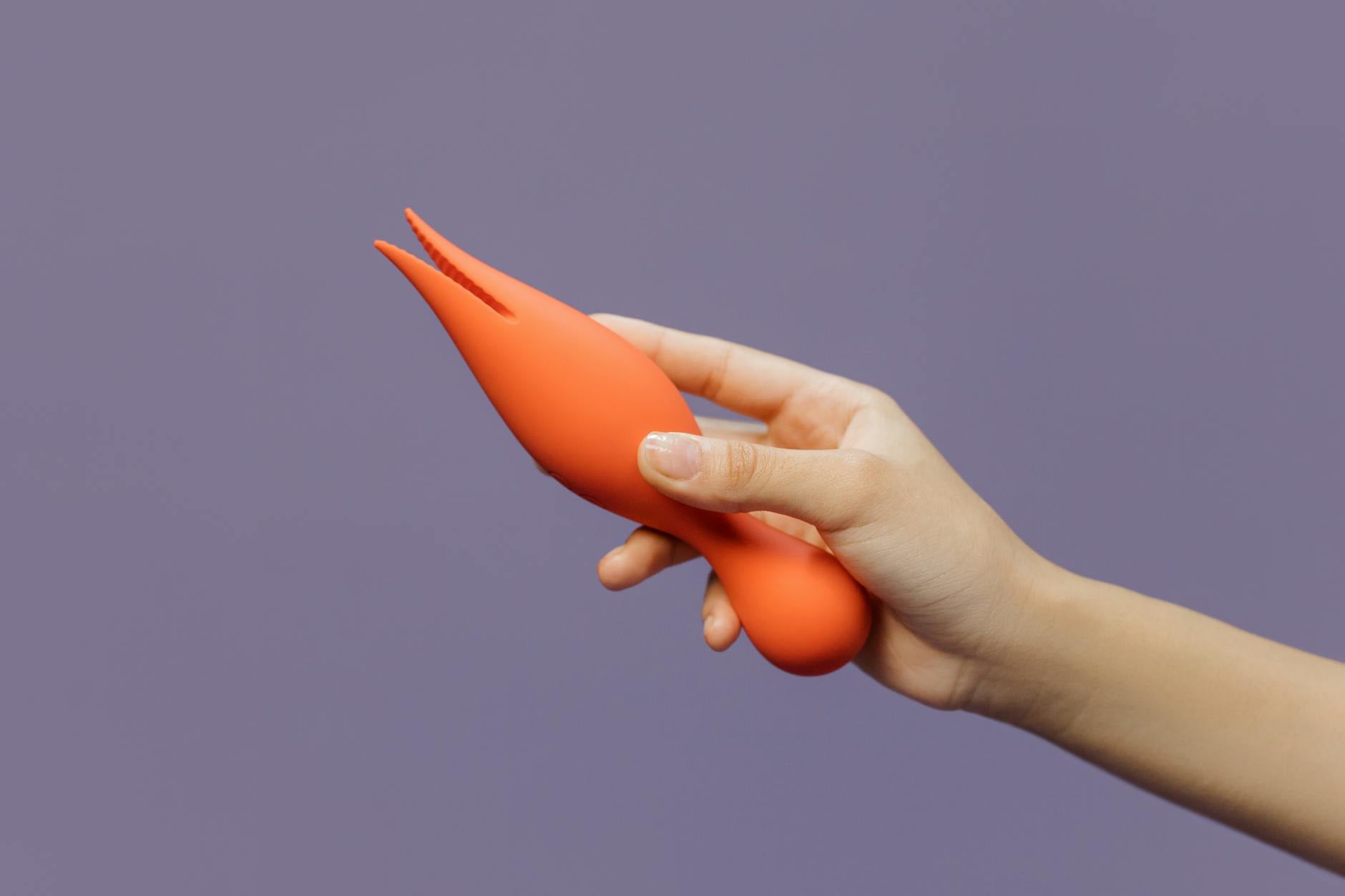
Here's what nobody tells you about sensitivity
Sensitivity with lemon vibrators is not a flaw. It's data. Your body is telling you something real about how you're wired, and once you learn to read that signal, pleasure becomes less of a guessing game and more of an actual conversation with yourself.
Most people assume sensitivity means "too sensitive." That's backward. Sensitivity means your nervous system is responsive, which is excellent news. The trick is learning your own threshold so you can use a lemon clitoral vibrator in a way that lights you up instead of overwhelming you.
What clitoral sensitivity actually is
Your clitoris contains roughly 8,000 nerve endings concentrated in a space smaller than a pea. That density is why sensation travels so fast and feels so intense. When you're sensitive, your nervous system is simply picking up on that stimulation more acutely. It's not weakness. It's neurology.
A lemon sucker or clitoral vibrator works by creating a seal and using patterns of suction, which is gentler than traditional vibration on delicate tissue. But "gentler" doesn't mean "one size fits all." Two people using the same lemon vibrator at the same pattern setting will have completely different experiences based on factors like:
Tissue thickness (genetics, hormones, age). Blood flow and arousal state. Current stress levels and nervous system activation. Friction history. Whether you're on hormonal birth control.
Each of these changes your baseline sensitivity on any given day.
The difference between "sensitive" and "too intense"
Listen to this carefully: not enjoying pattern 7 doesn't mean you're too sensitive. It means pattern 7 doesn't match your threshold right now.
Your body has a window of stimulation where pleasure lives. Too little, and you feel nothing. Too much, and your nervous system goes into overwhelm (that "numb" or "raw" feeling). Your job is finding that sweet spot.
Sensitivity that's uncomfortable usually shows up as numbness rather than sharp pain. If a lemon vibrator makes your clitoris feel numb, bruised, or raw, you're likely above your threshold. Back off one or two pattern levels, add more lube, or spend more time in foreplay to increase arousal and blood flow.
How to map your own threshold
Start by using your lemon vibrator solo, when you're relaxed and have time. This removes performance pressure and lets you focus on pure sensation.
Begin at pattern 1 or 2 (the lowest settings). Most people find early patterns feel almost too light. That's fine. Spend 2-3 minutes here. Notice how your body responds. Do you want more? Less? Is the sensation pleasant?
Move up one pattern every 2-3 minutes. You're not chasing orgasm. You're gathering information about where the line between "nice" and "too much" sits for you.
At some point, the sensation will shift from "that feels good" to "that's too intense." That boundary is your threshold. Bookmark it. For many people, that's patterns 3-5 on a lemon clitoral vibrator.
Do this same exploration a few more times over two weeks. Your threshold might shift slightly based on time of cycle, stress, sleep, or hydration. That's normal. The point is getting familiar with the range where your pleasure lives.
Why arousal level changes everything
One of the strangest things about clitoral sensitivity is how much it depends on whether your body is actually aroused. When you're aroused, more blood flows to your genitals, tissue swells slightly, and your nervous system becomes less reactive to pain signals. You can tolerate and enjoy higher intensity.
When you're not aroused, even low intensity feels uncomfortable.
This is why jumping straight to a lemon vibrator when you haven't spent time on foreplay often feels disappointing. You might think the toy doesn't work for you, when really your body just wasn't ready for it yet.
Build arousal first. Read something that turns you on, fantasize, take your time, use your hands. Once you're actually aroused (you'll know because things feel warm, your clitoris swells slightly, and the sensation is pleasurable rather than irritating), then introduce your lemon sucker. The same pattern that felt awful 10 minutes ago will probably feel incredible now.
The role of friction history
If you've spent years using high-intensity vibrators, your threshold might be higher than someone new to toys. That doesn't make you broken. It means your tissues have adapted to that intensity.
If you're coming from minimal toy use or purely penetrative sex, your clitoris might feel extra responsive to direct stimulation at first. Both patterns are fine. Where you sit on that spectrum just informs how you'll approach a lemon vibrator.
If you suspect your threshold has shifted from old toy use, you have options. Some people find that taking a 2-3 week break from vibrators resets sensitivity. Others gradually build tolerance back down by using lower patterns for longer stretches. There's no moral high ground here. Use what works for your body.
When to add more lubrication
Lube is not a sign of failure. It's a tool that often makes the difference between a lemon vibrator feeling uncomfortable and feeling incredible.
Water-based lube reduces friction, which means less direct pressure on sensitive tissue. This alone can bump your comfort zone up by 1-2 pattern levels. Silicone lube feels richer and lasts longer, but never use it with silicone toys like a lemon clitoral vibrator (it degrades the material).
Add lube before you start. Reapply every 5-10 minutes if you're going longer than that. More lube changes the sensation entirely. It's not cheating. It's smart.
Building confidence after an uncomfortable first experience
If your first time with a lemon vibrator felt too intense, your nervous system might be hesitant to try again. That's a protective response, not a character flaw.
To rebuild trust, go intentionally low. Use pattern 1 or 2 for longer sessions (10-15 minutes). Focus on the sensations without trying to reach orgasm. This rewires the association from "ouch" to "interesting." After a few sessions at low intensity, your body usually relaxes back into wanting more.
You might also try a different approach to the toy itself. Instead of applying it directly, hold it just barely off your clitoris and let the suction pull gently. Or angle it slightly instead of straight-on. Small positioning changes can drop intensity by a surprising amount.
The conversation to have with partners
If you're using a lemon clitoral vibrator with a partner, let them know your threshold. "I like patterns 3-4" is more useful than "I'm sensitive." Sensitivity without context sounds fragile. A specific preference sounds like knowing yourself.
Partners can help by letting you control the toy, checking in without judgment, and understanding that your threshold might be different on different days.
FAQ: Common sensitivity questions
Can I retrain my sensitivity to be less reactive?
Slightly, yes. Taking a break from vibrators for a few weeks can reset your baseline. But you can't (and shouldn't try to) numb your clitoris to sensation. That's like trying to make your hands less sensitive to touch. Instead, focus on finding toys and patterns that match your current wiring.
Is clitoral numbness permanent?
No. If you're feeling numb during or after toy use, you've likely gone above your threshold. Rest for a few days, then reintroduce the toy at much lower intensity with more lube and longer foreplay. Numbness usually clears within 24-48 hours. If it persists beyond that, see a gynecologist.
Will using a lemon vibrator change my sensitivity over time?
Not in the way most people fear. Your nerve endings won't disappear. You might notice your threshold shifts slightly, usually because your body adapts to consistent stimulation. This is normal. You simply adjust your pattern settings accordingly.
What's the difference between a lemon sucker and a traditional vibrator for sensitive people?
Suction vibrators create a gentler stimulation pattern because they work through pressure changes rather than direct mechanical vibration. Many sensitive people find they can use higher patterns on a lemon clitoral vibrator than on a traditional vibrator because the sensation feels less jarring. It's worth trying if regular vibrators feel uncomfortable.
Should I avoid using my lemon vibrator if I'm sensitive?
Absolutely not. Sensitivity just means you need to approach it more intentionally. Start lower, go slower, use more lube, spend more time on arousal, and pay attention to what feels good versus what feels overwhelming. Within a couple of sessions, most sensitive people find their groove.
Can birth control affect how sensitive I am to vibration?
Yes. Hormonal birth control changes blood flow and tissue thickness, which directly impacts sensation. Some people feel more sensitive on hormonal birth control. Others feel less so. The only way to know is to track your own experience over a few cycles and adjust patterns accordingly.
The bottom line
Your sensitivity is not a problem to solve. It's information to understand. Once you know your threshold and trust that you can stay below it, pleasure stops being something you're chasing and starts being something you're in control of. A lemon vibrator becomes a reliable partner in that conversation instead of a source of anxiety. That's the shift that changes everything.