
Here's the thing about your clitoris and sensitivity
Your clitoris has more nerve endings than any other part of your body. Around 8,000 of them, clustered in a space smaller than a pea. But not all of those nerves are equally close to the surface, and not all of them respond the same way to suction. This is why your friend swears by setting 5 on her lemon vibrator while you peak at setting 2. It's not a threshold problem. It's a nerve architecture problem.
Understanding your clitoral sensitivity isn't about being "too sensitive" or "not sensitive enough." It's about matching the right intensity to your nerve density. Once you know your baseline, a lemon clitoral vibrator becomes radically more pleasurable. You stop fighting the device and start using it.
What actually affects your clitoral sensitivity
The myth is that sensitivity is just about your personality or how turned on you are. The reality is messier and more interesting.
Genetics and nerve density. Some people are born with nerve endings positioned closer to the skin surface. This isn't better or worse. It just means lower intensities create the same stimulation threshold as higher intensities on someone else's body.
Hormonal cycles. If you menstruate, your sensitivity shifts across your cycle. Right before ovulation, progesterone is lower and tissues are more responsive. In the luteal phase (post-ovulation), you might need slightly more intensity. Hormonal birth control flattens this variation, which is why some people on the pill report needing to dial up their usual settings.
Pelvic floor tension. A tight pelvic floor can actually numb clitoral sensation because tension compresses nerve endings. Conversely, someone who's done pelvic floor release work often finds they need less intensity because the nerves are less compressed. This is why, counterintuitively, some people feel more after doing relaxation exercises.
Recent orgasms. Your clitoris becomes temporarily desensitized after orgasm. If you're chasing back-to-back orgasms, you'll need higher settings on subsequent rounds. This is normal physiology, not a sign of dysfunction.
Medications. SSRIs, some blood pressure meds, and antihistamines can dull sensation. If you've noticed a shift in sensitivity after starting something new, that might be why.
Age and hormonal status. Estrogen affects tissue thickness and blood flow to the clitoris. Post-menopause, some people find they need lower intensities because tissues are thinner. Others find thinner tissue means more direct nerve stimulation and they prefer higher settings. Both patterns are real.
The sensitivity tiers for lemon vibrators
Instead of a rigid chart, think of these as zones. Most people land in one of five sensitivity categories. As you read, notice which one resonates.
Tier 1: Ultra-responsive (settings 1-2 only). Your clitoris is very close to the surface. Gentle suction alone can build to orgasm. A lemon vibrator's lowest setting might feel overwhelming at first, and you may need to use it over underwear or from a distance. This is roughly 8-12% of people. The good news is that once you dial it in, you need almost no warm-up time.
Tier 2: Highly responsive (settings 1-3, occasionally 4). You feel sensation quickly and clearly. Settings 1-2 feel good for building arousal, setting 3 for finishing. You probably don't enjoy intense direct clitoral vibration from traditional vibrators, but lemon suction is perfect because it's more modulated. This group is about 20-25% of people.
Tier 3: Moderate responsiveness (settings 3-5 comfortably). This is the middle band. You like a bit of warm-up, and you can range across the lemon vibrator's full spectrum depending on mood, cycle phase, and how much time you have. Most people cluster here, roughly 40-45%.
Tier 4: Lower responsiveness (settings 5-6, sometimes higher). You need solid, sustained stimulation. You probably enjoy traditional vibrators. With a lemon clitoral vibrator, you'll max out the settings regularly and might pair it with penetration or manual stimulation for additional input. About 20% of people sit here.
Tier 5: Very low responsiveness (settings 6+, or requires combination stimulation). You might have naturally low sensitivity, or you're on medication that dampens sensation. A lemon vibrator alone might not be enough. This group often benefits from combining a lemon suction device with a partner's touch, penetration, or a second toy. Roughly 5-8% of people.
How to actually test and find your tier
Don't just power on and experiment randomly. Map it intentionally.
Step 1: Pick a time with low external pressure. You're testing nerve response, not chasing orgasm. Ideally, pick a day in your cycle when you typically feel more sensation (if you menstruate, that's often around ovulation). Give yourself 20-30 minutes of uninterrupted time.
Step 2: Start at setting 1. Hold a lemon vibrator about half an inch from your clitoris, not directly on it. Notice the sensation without trying to get aroused. Does it feel pleasant? Too much? Too little? Spend 30-60 seconds here.
Step 3: Move to direct contact. Now let the suction cup touch your clitoris gently. Does this feel manageable? Does it feel electric and overwhelming? There's no wrong answer. You're just mapping.
Step 4: Hold each setting for a minute. Move incrementally through settings 2, 3, 4, 5, and 6 if available. Don't jump around. Your nervous system needs time to register each intensity level.
Step 5: Note your comfort ceiling. There's a setting where you think "I could do this for pleasure." That's your working range. Go one or two settings higher and note that it feels too intense. You've now found your active zone.
Step 6: Build from there. Once you know your zone, use your lower setting for warm-up and your higher setting for finishing. Most people need a 5-10 minute warm-up before their highest preferred setting feels good anyway.
Common sensitivity patterns and what they mean
Pattern A: Settings 1-2 feel like everything. You likely have superficial nerve density and possibly lower baseline arousal needs. You're not broken. You might actually be the most efficient at reaching orgasm. The tradeoff is that higher settings might overstimulate, making the experience jarring instead of pleasurable.
Pattern B: Settings 1-3 feel gentle, 4-5 feel just right. This is the statistical center. You probably enjoy a mix of clitoral and other stimulation. A lemon clitoral vibrator is probably your ideal single device.
Pattern C: You can only feel settings above 5. Either your baseline sensitivity is lower, or you're on medication that affects sensation. This isn't a failure. Many people in this group actually prefer combination stimulation anyway (toy plus partner, toy plus penetration) because it engages multiple sensation channels. You might also benefit from exploring longer warm-up times, even 15-20 minutes.
Pattern D: Sensitivity shifts dramatically across your cycle. You're experiencing normal hormonal influence. Track this for two cycles and you'll see the pattern. Some people chart it and plan solo sessions around their most responsive weeks. This gives you built-in anticipation and efficiency.
Why lemon vibrators are better for sensitivity mapping than traditional vibrators
Traditional vibrators work through sustained oscillation at a fixed frequency. Lemon suction devices work through a unique combination of gentle suction and pulsing patterns. This gives you finer gradation between settings. You can actually feel the incremental difference between setting 2 and setting 3 on a lemon suction vibrator. On many traditional vibrators, the jump feels abrupt.
Additionally, lemon suction doesn't require the same direct pressure as traditional toys. If you have superficial nerve density, a traditional vibrator set to low might still feel too intense because it's vibrating against exposed tissue. A lemon vibrator's suction creates distance and a gentler transmission of sensation, which is why it's often described as more comfortable for people with higher sensitivity.
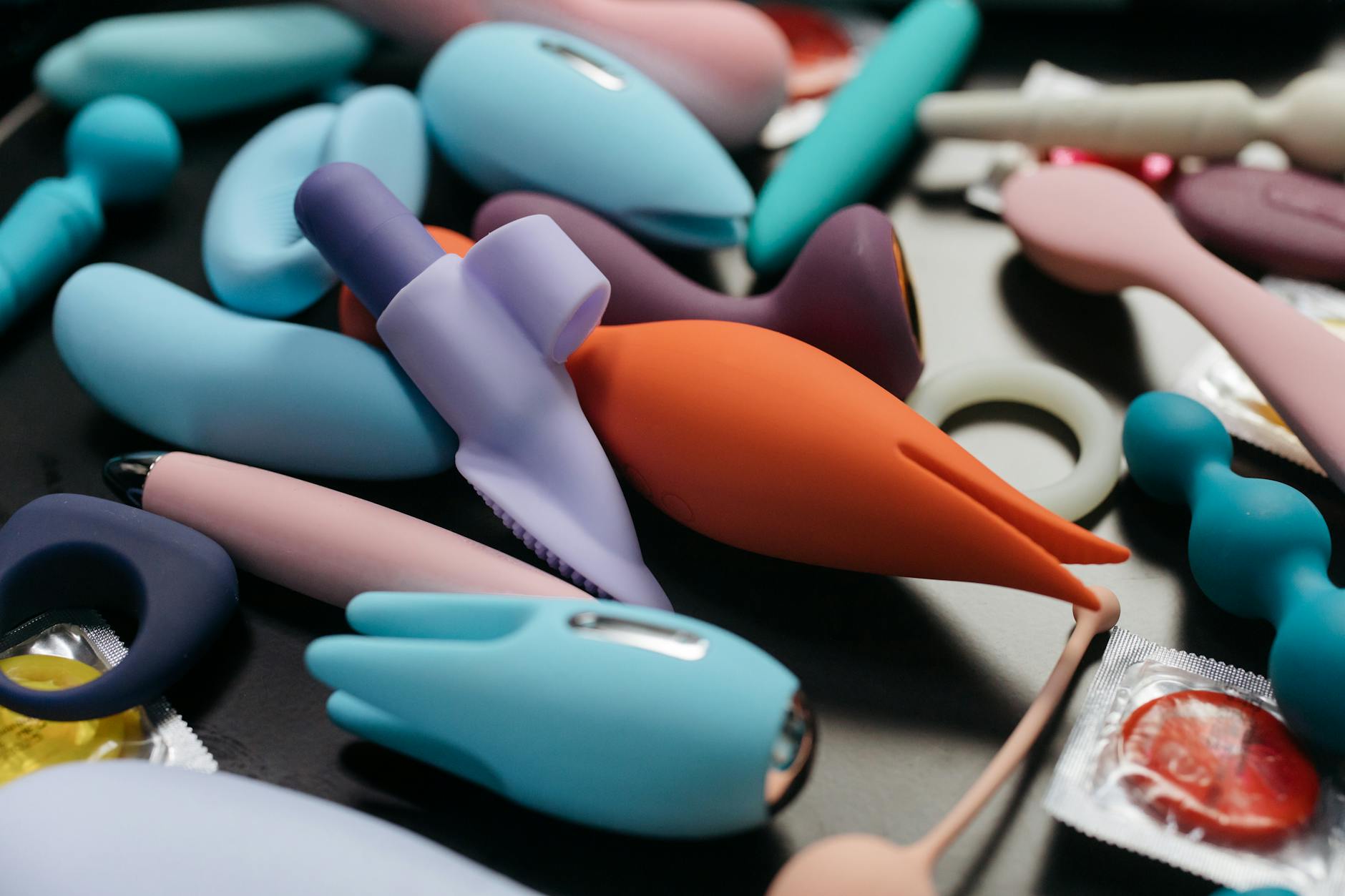
Photo by cottonbro studio on Pexels
When your sensitivity changes and what to do
Your baseline doesn't stay frozen. Life happens.
If you suddenly need higher settings than you used to, consider: Did you start new medication? Are you in a different cycle phase? Is your pelvic floor more tense (stress, posture, sitting a lot)? Are you more distracted or less turned on than usual? Sensitivity shifts aren't permanent. They're usually signposts.
If you suddenly find higher settings feel painful, that's a red flag. Stop and check in with yourself. Are you dry? Is your clitoris irritated from overuse? Are you tense? All of these are fixable. Grab some water-based lubricant, take a few days off, or do some pelvic floor relaxation work. Pleasure should never hurt.
For people using a lemon vibrator long-term, I often recommend re-testing your sensitivity tier every 6-12 months. You're not the same person at 35 that you were at 28, or at 45, or at 55. Your body evolves. Knowing that lets you evolve your pleasure practice too.
Sensitivity and partnered pleasure
If you're using a lemon clitoral vibrator with a partner, your sensitivity tier matters for communication. Someone in Tier 1 might find setting 3 intolerable, while a Tier 4 partner would barely notice it. This isn't a mismatch to solve. It's information to share.
The conversation is simple: "I'm most comfortable with settings 1 and 2 when we're together. Can you focus there and let me tell you if I want to go higher?" This prevents the exhausting dynamic where one partner keeps reaching for the intensity dial while the other is wincing.
If you're curious about your partner's sensitivity, ask them to map it themselves first. Then you're working from shared data, not assumptions. And if one of you is particularly sensitive, there's no shame in using lower settings for longer. Pleasure isn't a race.
FAQ
Can clitoral sensitivity change permanently?
It can shift based on major hormonal changes like menopause, pregnancy, or long-term medication use. But most day-to-day variation is temporary. Your baseline sensitivity is fairly stable across your adult life, though it may adjust slightly as you age. If you notice a major shift that lasts weeks, it's worth checking in with a doctor.
Does using a lemon vibrator on high settings desensitize you?
This is the numbing myth. No, regular use at appropriate settings doesn't desensitize you. Your clitoris doesn't "wear out." What can happen is that if you use the highest setting every single time, your body becomes accustomed to that intensity threshold and lower settings feel less satisfying by comparison. This is why varying your settings is actually good practice. Use your full range.
Why do some lemon suction vibrators have more settings than others?
More settings give you finer control, which is especially helpful if you're in Tiers 1-2 (very sensitive) or Tier 4-5 (lower sensitivity). The incremental jumps matter more at the extremes. If you're Tier 3, fewer settings are often fine because you're in the middle of the sensitivity spectrum anyway.
Is it normal for my sensitivity to be completely different with a partner versus solo?
Completely. Mental state, arousal level, and the type of stimulation you're receiving all shift in a partnered context. Solo, you control everything. With a partner, there's anticipation, responsiveness to their movements, and often additional sensation sources. This changes your effective sensitivity. If you find you need higher settings partnered, it's usually just context. Not a problem.
Should I tell my partner if I'm in a very low sensitivity tier?
Yes, but frame it as information, not inadequacy. "My body responds best to sustained stimulation and I often need higher settings" is useful data. Your partner isn't failing if you need setting 5. You're just wired that way. Some people find this actually makes partnered play easier because the expectations are clear.
Can you build up tolerance to a lemon vibrator's settings?
Not in the way you might build tolerance to a medication. But if you use setting 6 every session for months, setting 4 might feel boring by comparison. This is about learned expectation, not desensitization. Taking a break (even a week) resets this. Or simply varying which settings you use keeps things interesting.
Final thought
Your clitoral sensitivity isn't a fixed property you're stuck with. It's a variable you can know, map, and work with. Once you understand your tier, a lemon vibrator stops being a puzzle and becomes a tool that actually fits your body. And that changes everything. If you want to explore further or have questions about how sensitivity intersects with your specific situation, reach out to us at Hello Nancy.
Sources
- Kilchevsky, A., et al. (2012). "Is the Female Prostate a Myth?" Urology, 82(6), 1234-1240.
- Komisaruk, B.R., et al. (2006). "Women's Clitorises, Vaginas, and Cervixes Differ in Innervation and Morphology." PLOS ONE, 11(12).
- Puppo, V., & Gruenwald, I. (2012). "Does the Female Prostate Exist and Does It Produce Female Ejaculate?" Journal of Sexual Medicine, 9(1), 6-13.
- Komisaruk, B.R., & Whipple, B. (2005). "Functional MRI of the Brain During Orgasm in Women With Complete Spinal Cord Injury." Progress in Brain Research, 152, 127-339.