Let's start with the real issue
Thin or delicate vaginal tissue isn't a flaw. It's anatomy. And it changes how pleasure works. The good news: a lemon vibrator can actually be the right tool for this situation, but only if you understand how to work with your tissue instead of against it.
Tissue can thin for lots of reasons. Estrogen shifts (menopause, breastfeeding, certain medications), hormonal birth control, chronic health conditions, or just how you're built. None of these mean you can't have intense, satisfying pleasure. They just mean you need a smarter strategy.
Here's what I see in my practice most often: people with delicate tissue try to use vibrators the same way everyone else does, get uncomfortable or sore, and assume vibrators aren't for them. Wrong conclusion. The vibrator was right. The method wasn't.
Why thin tissue needs a different approach
When tissue is thin, the layers underneath become more sensitive to pressure. The nerve endings are closer to the surface. Direct friction or aggressive suction can trigger irritation, tiny tears, or burning that shows up hours or even days later. That's not pleasure. That's your body saying "that was too much."
The Lem's suction technology is actually ideal for delicate tissue because it works through gentle, rhythmic negative pressure rather than vibration or direct friction. But even suction can overwhelm thin tissue if you skip the setup.
The key difference is intensity and duration. Think of it like this: delicate tissue is like a silk blouse. Aggressive vibrators are like throwing it in the wash on heavy cycle. A lemon clitoral vibrator on the right settings, with the right warm-up, feels more like hand-washing. Gentle, controlled, effective.
Rule one: lubrication is non-negotiable
I say this to every client with delicate tissue, and I mean it: use lube. Every single time. Not because you're broken. Because thin tissue doesn't produce enough slickness on its own, and without it, even the gentlest vibrator will feel scratchy.
Water-based lube is your baseline. It mimics your body's natural lubrication and works with the Lem without degrading the silicone. Apply it generously. More than feels normal. Your tissue will thank you.
Silicone-based lubes feel richer and last longer, but they can damage silicone toys, so stick with water-based if you're using any silicone vibrator. The tradeoff is worth it.
One more thing: reapply lube halfway through. Delicate tissue can absorb it faster, and letting friction build midway through stimulation defeats the whole point.
Rule two: warm-up time is longer than you think
With delicate tissue, arousal isn't optional. It's structural. When you're aroused, blood flow increases to the vulva, and tissue plumps slightly. That creates a protective barrier and increases sensation. When you skip warm-up and jump straight to the vibrator, you're basically trying to stimulate tissue that's too thin and too dry. That's the setup for discomfort.
Budget 20 to 30 minutes before you even turn on the Lem. That's not a luxury. That's the price of entry.
Warm-up can mean whatever turns you on. Reading erotica. Masturbating with your fingers. Thinking about your partner. The specific method matters less than the time spent. Let your body get ready.
You'll know it's working when you feel dampness, warmth, and a shift in how sensitive everything feels. That's when you're ready to introduce the vibrator.
Rule three: start at the lowest settings and go slow
The Lem has multiple intensity levels. Most people with delicate tissue never need to go past settings 2 or 3. I know that sounds low. Start there anyway.
Hold the vibrator gently against your skin at first. Don't press down. Let the suction do the work. The pressure from pressing actually intensifies the sensation, and that's the last thing delicate tissue needs right now.
Stay at one setting for a few minutes before you increase. Notice how it feels. Is there warmth? Tingling? Pleasure? Or does it feel scratchy or intense? If it's the latter, stay where you are or turn it down. Your tissue will tell you when it's ready for more.
Most clients with delicate tissue find their sweet spot involves a pattern like this: two minutes on setting 1, then move to setting 2, stay for three to five minutes, then consider setting 3 if the first two felt good. Stop there. You don't need higher settings to have an orgasm.
Rule four: take it off your skin between sessions
This one's crucial and often overlooked. After you've used the Lem on delicate tissue, even if everything felt great, take a break. Your tissue needs recovery time.
I recommend at least two days between vibrator sessions if your tissue is particularly thin. Use that time for manual stimulation, partner play without the vibrator, or just rest.
This isn't deprivation. It's maintenance. Delicate tissue heals and regenerates faster when you're not constantly stimulating it. You'll actually have more pleasure over time if you space things out.
Understanding irritation versus normal sensation
During stimulation, you should feel pleasure, warmth, and maybe some tingling. That's normal. That's what you want.
If you feel burning, sharp pain, a scratchy sensation, or stinging, stop immediately. That's your tissue saying "too much."
After stimulation, mild tenderness is normal. Noticeable soreness, redness that lasts more than an hour, or discharge that looks different is a sign you pushed too far.
If irritation happens, it's data. Turn down your settings next time, use more lube, extend your warm-up, or wait longer between sessions. Your tissue will adapt to the vibrator, but only if you listen to it first.
Positioning matters more than you'd think
With the Lem, angle is everything when you have delicate tissue. Approach from below, with the vibrator held at about a 45-degree angle upward. This position lets the suction work more effectively and reduces pressure on the most sensitive areas.
Avoid pointing the vibrator straight up into your body. That concentrates all the sensation into one small spot, which can overwhelm thin tissue quickly.
If you're using it with a partner, guide them. Show them the angle. Tell them the pressure. Your comfort is not a mystery. It's communication.
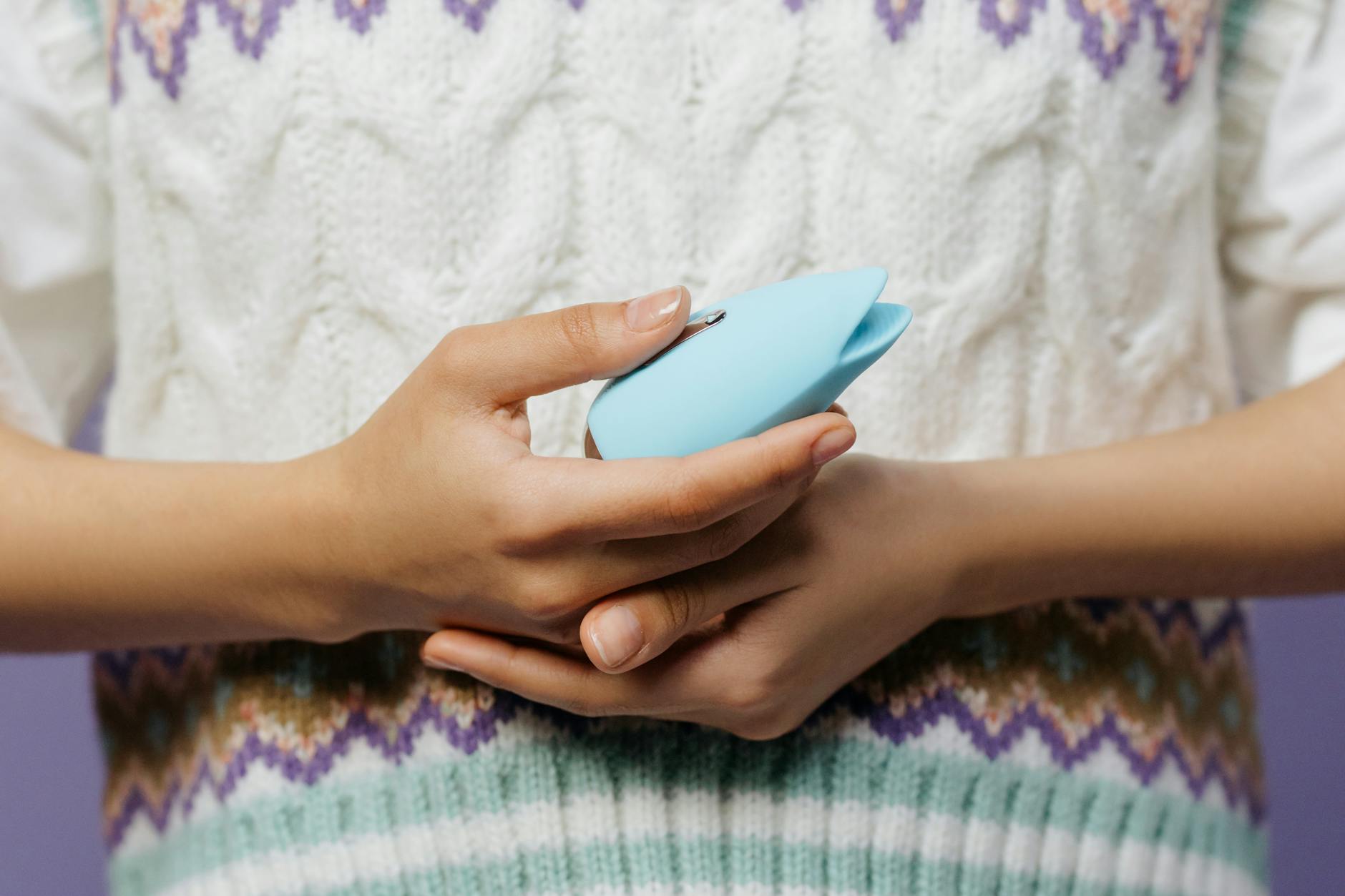
Photo by cottonbro studio on Pexels
When tissue gets more resilient over time
Here's the plot twist: consistent, gentle stimulation actually thickens tissue slightly. Increased blood flow brings more nutrients and supports tissue health. Over months of careful practice, you might find that you can use slightly higher settings or go a bit longer. Your tissue adapts.
This doesn't mean pushing harder faster. It means that if you follow these guidelines, you'll probably notice after six to eight weeks that your comfort zone has expanded. That's tissue getting healthier, not you becoming "less delicate."
When to check in with a healthcare provider
If you're experiencing ongoing soreness, discharge changes, or burning that doesn't improve after you adjust your technique, see your doctor. Delicate tissue can sometimes indicate an underlying condition like atrophic vaginitis (tissue thinning from low estrogen) or lichen sclerosus. Both are treatable. Both respond well to topical treatments.
Your provider can recommend whether estrogen cream, vaginal moisturizers, or other interventions might help. You can use the Lem alongside these treatments. They're not mutually exclusive.
If stimulation has always caused pain or discomfort, talk to a pelvic floor physical therapist or a gynecologist who specializes in sexual health. Sometimes delicate tissue is paired with pelvic floor tension that makes everything feel more intense. A specialist can help you figure out what's going on.
The bigger picture: this is not a limitation
Delicate tissue requires a different set of skills, but those skills lead somewhere good. You learn your body's signals more clearly. You figure out what actually feels amazing instead of what you think you're supposed to like. You get better at asking for what you want.
That makes you a better partner. That makes solo play more satisfying. And honestly, that's where real pleasure lives. Not in the highest settings on the lemon vibrator. In knowing yourself and honoring what your body actually needs.
Use the Lem thoughtfully with delicate tissue, and you'll have years of satisfying, comfortable stimulation ahead. Rush it, and you'll get sore. The choice is yours.
People also ask
Can I use a lemon vibrator if I have vaginal atrophy from menopause?
Yes, absolutely. Vaginal atrophy (also called genitourinary syndrome of menopause) is one of the most common reasons tissue thins. The Lem is actually well-suited for this because suction stimulates without requiring the tissue to tolerate direct friction. Follow the guidelines above: warm up longer, use more lube, start at lower settings, and take rest days between sessions. If stimulation causes persistent soreness, ask your doctor about topical estrogen cream. Many people use both the cream and the vibrator together with great results.
How long does it take for delicate tissue to toughen up with regular stimulation?
Most people notice improved comfort and resilience within six to eight weeks of consistent, gentle play. You're not really "toughening up" tissue. You're improving blood flow and tissue hydration. That said, if you're taking a break or you've had a gap in your routine, you might notice sensitivity returns. That's normal. Just ease back in using the same gentle approach.
Is water-based lube enough, or do I need to use vaginal moisturizer too?
During stimulation, water-based lube is what you need. But for overall tissue health, using a daily vaginal moisturizer (like hyaluronic acid or glycerin-based products) can help tremendously. Daily moisturizers improve baseline tissue thickness and hydration between sessions. Think of lube as short-term support during play and moisturizer as long-term maintenance. Using both is ideal if delicate tissue is chronic.
What's the difference between pain during use and pain after?
Pain during use usually means too much intensity, not enough lube, or skipped warm-up. Stop and adjust. Pain after use (burning, soreness that lasts hours or more) usually means you went too long, pressed too hard, or didn't use enough lube. Next time, shorten your session, reduce settings, or both. If pain persists after you've adjusted your technique, see a healthcare provider.
Can I use a Lem vibrator with estrogen cream for atrophy?
Yes. Many people do this successfully. Apply the estrogen cream as directed by your doctor (usually a few nights per week), then wait until the next day or later in the week to use the vibrator. Don't apply cream and immediately use the vibrator, as that can wash the cream away. Otherwise, the two approaches complement each other well.
How do I know if my tissue is actually delicate or if I'm just not aroused enough?
This is a great question. Spend one session focusing purely on warm-up and arousal with zero vibrator. Twenty to thirty minutes. Manual stimulation, fantasy, partner touch. Afterward, notice how the tissue feels and responds. Does it feel plumper, wetter, more resilient? That's what proper arousal looks like. If that high-arousal baseline still feels delicate and thin, you probably have structurally delicate tissue. If it feels significantly different, arousal might have been the missing piece all along. Either way, the lemon vibrator will work better once you know the difference.
The takeaway
Delicate tissue and clitoral vibrators aren't at odds. They just require respect, patience, and a methodical approach. Start with lube and a long warm-up. Use lower settings. Wait between sessions. Listen to your body. Over time, you'll dial in the exact technique that works for your anatomy. That's when the Lem becomes genuinely transformative.
If you're struggling with persistent discomfort or soreness even after adjusting your approach, reach out to a healthcare provider or schedule a consultation on your terms. Your pleasure matters, and the right support makes all the difference. Contact us if you have specific questions about using the Lem safely with delicate tissue.