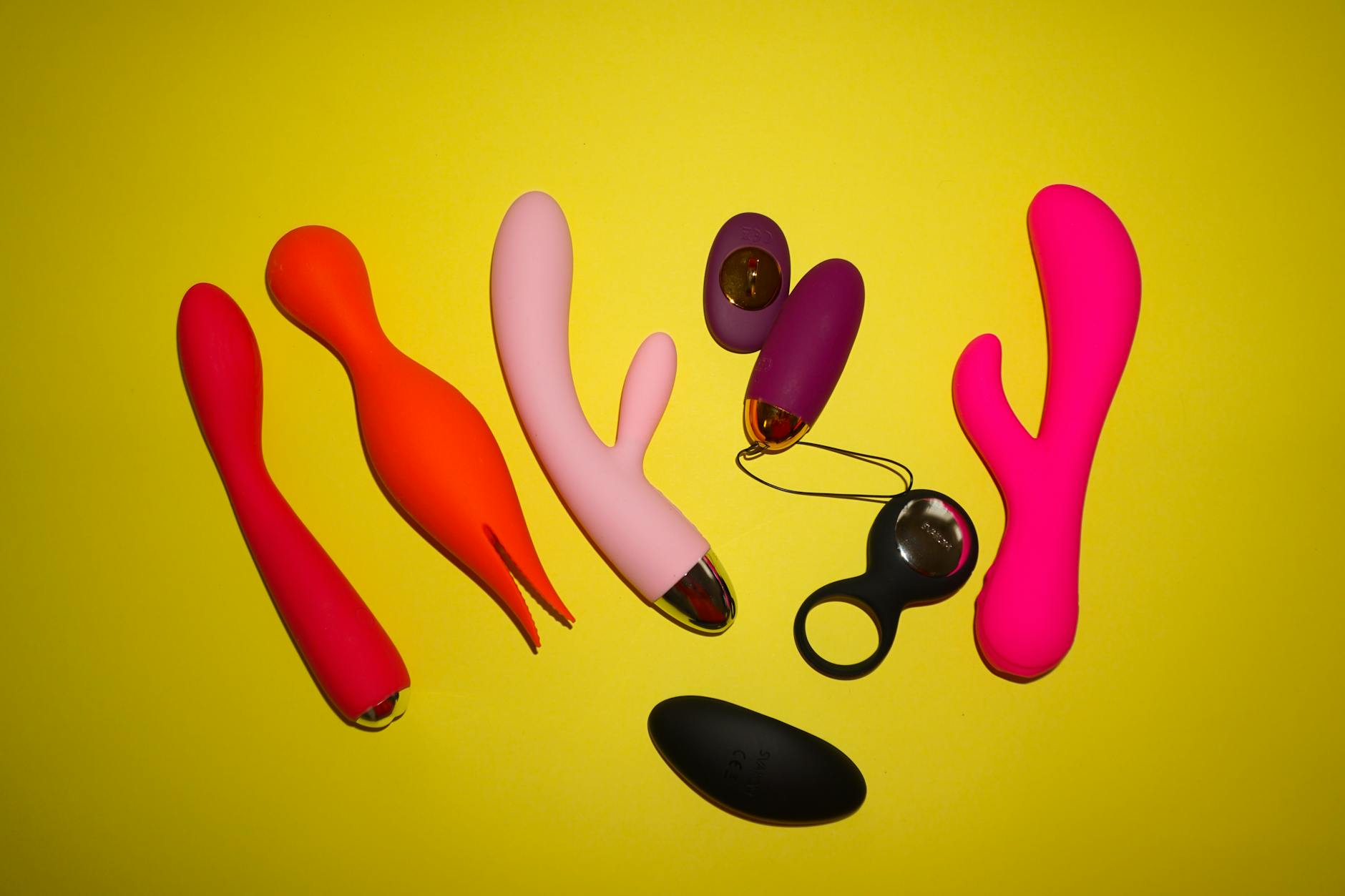
Here's the thing about partner resistance
About 40% of the couples I work with hit this exact wall: one person wants to explore toys, and the other person feels threatened, inadequate, or just plain uncomfortable. The discomfort is rarely about the toy itself. It's about what they think the toy means about them, about their partner's satisfaction, about the relationship.
Most people whose partners suggest toys interpret it as "I'm not enough." That's not true, and it's not what you meant, but that's the story they're running. So before you even touch a lemon vibrator together, you need to untangle that story.
Why your partner might actually be nervous
There are usually three things happening underneath the "I don't know about this" response.
First is ego. Sex education tells us that partners should be able to bring you pleasure on their own. Adding a toy can feel like evidence that they've failed. This is especially true if your partner grew up in a household or culture where sex toys were seen as shameful or cheating.
Second is confusion about what the toy replaces. Your partner might think you want to use the toy instead of them, not alongside them. They don't realize that a lemon clitoral vibrator amplifies what's already happening between you, rather than substituting for their touch.
Third is just unfamiliarity. They've never seen one up close, never touched one, never had it explained what it actually does. Anxiety lives in the gap between what we know and what we don't. Fill the gap, and the anxiety shrinks.
The conversation before the toy arrives
Don't ambush your partner with a toy already in the bedroom drawer. Talk about it when you're both clothed, relaxed, and not about to have sex.
Here's how I frame it with couples: "I've been thinking about something that might feel good for me, and I wanted to talk to you first. I found this thing called a lemon vibrator. It's shaped like a lemon, it does suction instead of vibration, and I think it might help me have better orgasms. I want to try it with you, not instead of you. Interested in hearing more?"
Notice what's in that sentence: you're specific about what it does, you're naming it as something you want to try with them, and you're giving them a soft out ("interested in hearing more?") so they don't feel ambushed.
Listen to their response without defending. If they say "I don't know, that feels weird," don't jump to "No, it's totally normal, lots of people use toys." That sounds like you're trying to convince them they're wrong for feeling how they feel. Instead: "Tell me what feels weird about it."
Most of the time, when they actually articulate the worry, it's something like "I feel like it means I'm not good enough," or "I'm worried it'll change what we do," or "I just never thought we were that kind of couple." Those are conversations you can actually have. "Not good enough" is addressable. "That kind of couple" is addressable.
How to show them it's not a threat
Invite them to hold it. Let them feel the weight, see the material, understand the size. A lemon clitoral vibrator is small. It's not intimidating once someone holds it in their hand and realizes it's literally the size of a lemon.
Explain what it does in plain terms: "It uses suction instead of constant vibration, so it kind of pulses and releases. Some people say it feels like gentle pressure and release, over and over." Don't oversell it. Don't say "You'll love this" or "This will change your life." Let them be skeptical.
Then say something true: "I want to try it, and I want you to be part of that. Not watching from the corner of the room. Like, your hands on me while I use it. Your voice. You choosing when to turn it on and off. It's still us."
That is the key sentence. The toy is not a replacement. Your partner's touch, attention, and presence are still the center. The lemon vibrator is just an amplifier.
When you actually use it together the first time
Don't make it a production. You don't need candles or a special moment. Actually, the opposite. Pick a time when you're already intimate and comfortable, but not when the stakes feel high. Not your anniversary, not after weeks of not having sex, not when your partner is already a little insecure.
Start without turning it on. Have your partner hold it against your skin while they're touching you. They need to feel that their hands and the toy can coexist. Their hand on your thigh, the toy on your clitoris. Their mouth on your neck. Their voice in your ear asking what feels good.
Then ask them to turn it on. Low setting. See how they react. Most of the time, when someone feels the vibrator doing its thing and they're also touching you and present with you, the anxiety drops instantly. They realize: this isn't replacing me. This is making her feel better. And if she feels better, I feel better.
Let them experiment with it. "Move it a little to the left." "Turn it up slightly." Give them instructions so they feel like they're doing something, not watching you do something.
What to say if they're still uncomfortable
If after one try your partner says they're just not into it, don't push. But do ask: "What was uncomfortable? Was it watching me? Was it worried I was enjoying it too much? Was it just too weird?"
Sometimes the answer is "I just feel strange," and you need to decide: do I need this toy enough to keep asking, or am I okay shelving it? That's a real choice. You get to make it. But make it consciously, not by silently resenting your partner for not being open-minded.
Other times the answer is "I felt like I wasn't doing enough." That's fixable. Have them hold the toy. Have them be the one controlling it. Have them be the one deciding when and how it touches you. Suddenly it's not something you're doing separately; it's something you're doing as a team.
If after a few tries your partner is still genuinely closed off, you might talk to a couples counselor. Not because there's anything wrong with your relationship, but because sex toy anxiety sometimes sits on top of deeper stuff about control, trust, or whether both people's pleasure actually matters in the relationship. A therapist can help untangle that in a way that doesn't feel accusatory.
The slow mindset shift
Once your partner realizes that a lemon clitoral vibrator isn't a threat to them, something interesting happens. They often become curious. They might ask questions. They might suggest using it in different ways. They might even get invested in finding the right pattern or pressure that makes you respond most intensely.
That's when you know the resistance has actually shifted. The toy went from "threat" to "tool we use together."
Honestly, I've seen couples become closer after introducing a toy together, because it forced an honest conversation about what they each needed and wanted. The toy itself wasn't magical. The honesty was.
Your partner's nervousness isn't a sign you should drop the idea. It's a sign that you need to slow down and include them in the decision, rather than making it happen to them. That distinction matters more than the toy itself.
People also ask
How do I know if my partner will ever be okay with a lemon vibrator?
Most people get comfortable with sex toys once they understand what they actually do and realize it doesn't threaten their role in your pleasure. If your partner's resistance is rooted in practical concern ("I don't understand what it's for"), that usually resolves with conversation and education. If the resistance is rooted in deeper control issues or beliefs about what sex should look like, that needs more time or professional support. But nervousness alone isn't a permanent no.
Should I use the lemon vibrator alone first, before introducing it to my partner?
Yes, probably. If you know how the toy feels and what settings work for you, you can explain that to your partner more confidently. You'll also be calmer when introducing it, which sets a better tone. Your partner will pick up on your ease and feel safer. Plus, you'll have a real answer when they ask "Does it feel good?" instead of just hoping it will.
What if my partner wants to use the vibrator on me but I feel shy about it?
That's normal. The first time someone uses a toy on you, it feels vulnerable in a specific way. You're giving them total control over your pleasure, and you might worry they'll judge how your body responds or think you're "too easy" to satisfy. Talk about this. Say out loud: "I might feel self-conscious, and I'm asking you to be patient while I get used to this." A good partner will slow down, check in, and make you feel safe. If they don't, that's worth examining.
Should I buy an expensive lemon vibrator or start with something cheap?
If your partner is already nervous, a cheap knockoff toy is not going to help your case. It'll feel plasticky, it might not work well, and it sends the message that you don't take this seriously. Get something designed well, made from body-safe silicone, and backed by a brand you trust. The Lemon Clitoral Vibrator from Get Lemon Vibrator is about $89, and it's worth it because it actually works and it looks intentional, not like a gimmick. Your partner will respect that you invested in something real.
Is it normal for my partner to feel less interested in sex after I introduce a toy?
Sometimes, yes, temporarily. The introduction of a toy can bring up stuff that makes someone want to withdraw. But this usually passes once they feel secure again. If the withdrawal lasts weeks or months, that's worth talking about with a therapist. It might not be about the toy; it might be about something the toy uncovered in your relationship.
How long before my partner stops being nervous about the toy?
Many people shift from nervous to comfortable after one or two good experiences using it together. Some take longer. The timeline depends on why they were nervous in the first place. If it's just unfamiliarity, it's usually fast. If it's tied to deeper beliefs about sex or vulnerability, it takes longer. Give it time. Pushing too hard makes everything take longer.
The bigger picture
Introducing a lemon clitoral vibrator into a relationship where one partner is nervous is really about asking: can we talk honestly about what we each want? Can we try something new together? Can we stay curious instead of defensive when pleasure looks different than we expected?
The toy is secondary. The conversation is what matters. If you can have a real conversation about why your partner is scared, and they can tell you without shame, and you can actually listen instead of trying to convince them they're wrong, you're already winning. The vibrator is just the thing that made the conversation happen.
Ready to have that conversation? Start small, stay curious, and remember that your partner's nervousness isn't stupidity. It's just unfamiliarity. Familiarity fixes most of that.
If you're stuck in the conversation or it keeps circling, reach out to a couples counselor or contact us at /contact. Sometimes a neutral third party can help couples untangle this stuff in a way that moves both people forward.