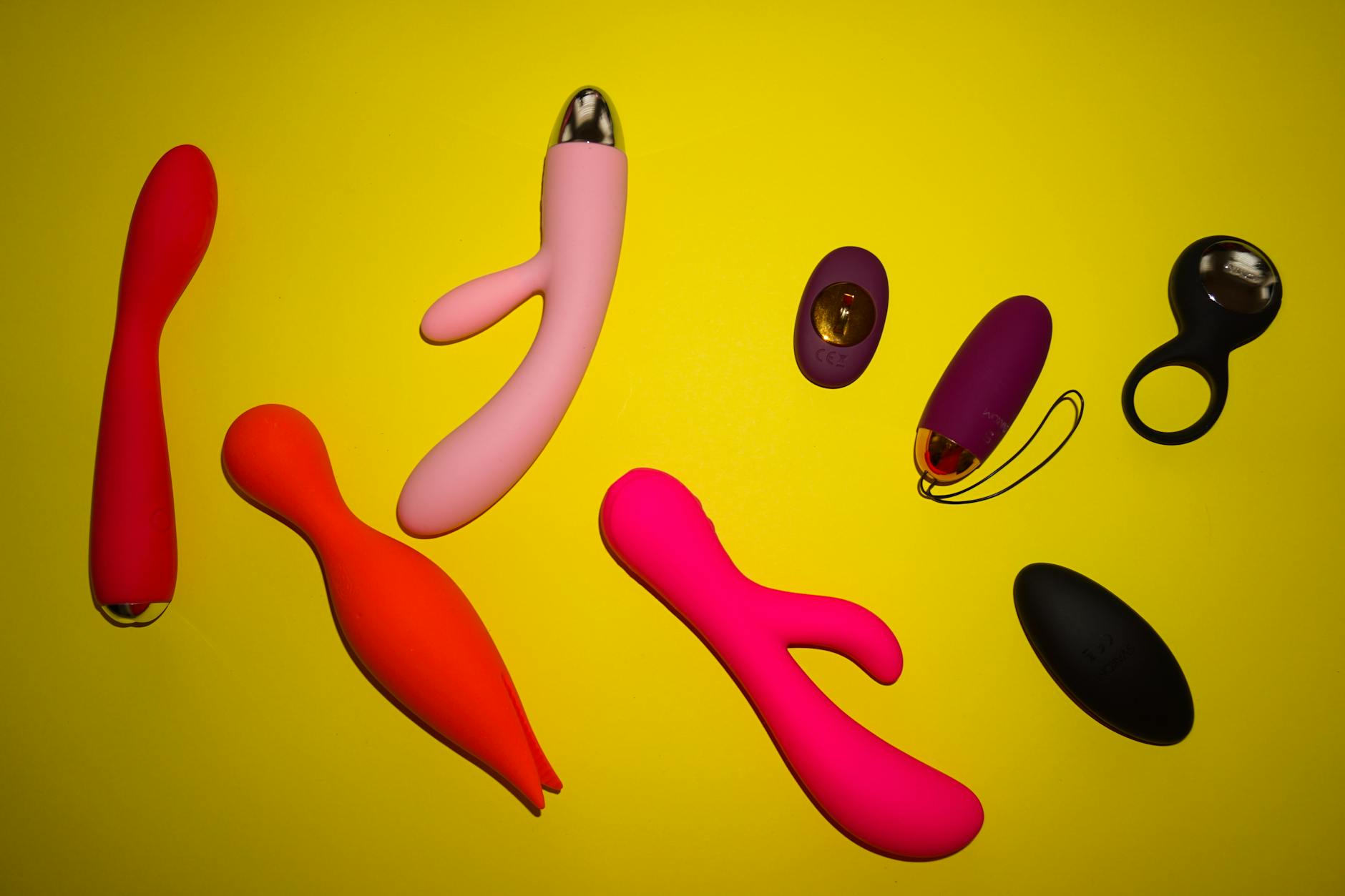
Let's talk about the rhythm nobody explains
Your arousal is not a flat line. It's a curve that shifts week to week, and most of that movement is estrogen. The problem is that nobody tells you this upfront, so you end up thinking something's broken when really your body is just responding to a hormone that's supposed to move.
Here's what actually happens, and what it means for how you use a lemon clitoral vibrator.
Why estrogen matters for arousal
Estrogen affects arousal in three direct ways. First, it changes blood flow to your genitals. Higher estrogen means more engorgement, more sensitivity, and faster response time. Lower estrogen means the opposite. Second, estrogen influences vaginal lubrication and tissue thickness. When estrogen is high, everything is plumper and more naturally slick. When it dips, tissues get thinner and drier. Third, estrogen affects your brain's dopamine and serotonin, which directly influence desire itself.
This doesn't happen once. It happens cyclically, usually peaking around ovulation and dropping sharply before your period.
Why this matters for pleasure: a lemon vibrator or any clitoral vibrator that felt perfect last week might feel too intense or not intense enough this week. That's not a equipment problem. That's estrogen doing exactly what it's supposed to do.
The high-estrogen phase (around ovulation)
About 12 to 16 days before your period starts, estrogen peaks. During this window, your clitoral tissue is engorged, your natural lubrication is highest, and your nervous system is primed for sensation. Arousal builds faster. Orgasms often feel more full-body.
What to adjust with your lemon sexual toys during this phase: you can go harder and faster. Start at patterns 2 or 3 on your device if patterns 1 is usually your entry point. Your tissue is more forgiving. The suction feels richer because there's more tissue to work with. Many people report that their most powerful orgasms of the cycle happen during the high-estrogen window.
One thing worth knowing: during this phase, you might orgasm faster than usual. That's not a sign you need more stimulation. It's a sign your body is primed and responsive. Take the win. You don't always need longer sessions when estrogen is high. Sometimes faster is just better.
The low-estrogen phase (before and during menstruation)
About a week before your period and through the first few days of bleeding, estrogen drops. Your clitoral tissue is less engorged. Lubrication is lower. Nerve sensitivity can actually increase even as blood flow decreases, which creates a weird effect where everything feels more raw and less smooth.
What changes with your lemon clitoral vibrator: you'll want lower intensities. Start at pattern 1. Your tissue is more delicate during this window. The sensation can feel sharper or less rounded. Many people find that direct, repetitive suction feels better than broad patterns during this phase because it's more concentrated and less diffuse.
You might also need more lubricant during this window. Water-based works fine. It's not that your natural lubrication disappears entirely, but it does decrease enough that the friction changes. Adding external lubrication brings back the glide and comfort.
If you've ever noticed that your lemon vibrator or any clitoral vibrator feels painful or too intense at certain times of the month, this is why. You're not broken. Your estrogen is just lower, and the tissue is more sensitive to pressure.
The post-period window (follicular phase)
The week right after your period ends, estrogen begins to climb again. This is the window where many people feel a surge in both energy and desire. Arousal is easier to access. Orgasm comes more readily. Your tissue is recovering its plumpness.
This is a good time to experiment with patterns you might have felt were too much during the low-estrogen phase. Your body has space to handle it. Longer sessions feel better because you've got the stamina and the responsiveness.
What to track and why it helps
Keep a one-line note on your phone or in a period tracker about how pleasure feels. Not how it should feel. How it actually feels. Pattern it against your cycle.
Track: arousal ease (how quick it is to turn on), tissue sensitivity (does it feel raw or smooth), orgasm intensity, and preferred intensity level on your device.
After two or three cycles, you'll see the rhythm. You'll know that patterns 1 to 2 feel better on day 27, but patterns 3 to 4 feel good on day 14. You'll know that you need more time on day 25 but less on day 10. This isn't obsessive tracking. It's just information that makes pleasure easier.
When you understand your own cycle, you stop seeing estrogen fluctuations as a problem. You start seeing them as a built-in variety in how your body responds. That's actually useful information.
The role of lubrication across your cycle
Water-based lubricant is always an option, but it becomes essential during the low-estrogen phase. During the high phase, many people find they don't need it at all. That's fine. Use it when your body benefits from it.
Silicone-based lubricant lasts longer and feels richer, but it can damage silicone toys. Since lemon sexual toys are often silicone, stick to water-based to be safe.
During the high-estrogen phase, water-based lube can actually feel thin or absorb too quickly. Some people prefer skipping it entirely when natural lubrication is higher. Listen to what feels good on your skin, not what you think should happen.
When stress or other factors override the cycle
Here's the thing that catches people off guard: your cycle is estrogen, but it's not only estrogen. Stress tanks arousal even when estrogen is high. Poor sleep does. Relationship tension does. Medications like antidepressants or antihistamines do. Alcohol and caffeine shift things too.
So if you're tracking your cycle and one high-estrogen week still feels flat, don't assume the model is wrong. Check what else changed that week. Did you sleep terribly? Did something stressful happen? Are you fighting with your partner? That overrides hormones.
The cycle is the base rhythm, but it's not the only thing playing.
How to adapt your technique across the phases
High-estrogen phase: longer warm-up is optional. Go to higher patterns earlier. Full-body engagement feels good. Orgasm often arrives faster. Repetition works as well as variation.
Low-estrogen phase: longer warm-up helps. Keep intensity lower. Consistent, concentrated patterns work better than switching around. External lubrication becomes essential. Shorter, focused sessions often feel better than extended ones.
Post-period window: experiment. Your responsiveness is returning. This is the time to try the patterns or durations that felt awkward during the low phase.
If you have a partner, the most useful thing you can do during low-estrogen weeks is tell them. Not as an excuse. As information. "My body needs gentler touch right now, and more lube" is a useful conversation that makes both of you more successful.
Managing expectations around consistency
One of the most common things I hear from people is that they think pleasure should feel the same all the time. It doesn't. It's not supposed to. Arousal and sensation are supposed to shift with your cycle, your sleep, your stress, and your relationship state.
When you use a lemon vibrator or any clitoral vibrator and notice that what worked last week doesn't work this week, that's not a sign of dysfunction. It's your nervous system responding exactly as designed to hormonal shifts.
The goal isn't consistency. It's adaptability. That's actually more pleasurable in the long run because you're working with your body instead of against it.
If you haven't explored how your cycle affects arousal, starting to notice it changes everything. Pleasure gets easier because you're not fighting your own physiology. You're working with it.
People also ask
How does estrogen affect orgasm intensity?
Estrogen increases blood flow to your clitoral tissue and amplifies nerve sensitivity in your pelvic region. During high-estrogen phases, particularly around ovulation, orgasms tend to feel more intense and full-body. The increased engorgement means more tissue is engaged, which creates a richer sensation. During low-estrogen phases, orgasms can feel more localized or less explosive, though not less pleasurable. The sensation is just different. Some people actually prefer the focused intensity of a low-estrogen orgasm. It's not about better or worse. It's about different types of sensation at different points in your cycle.
Should I use my lemon vibrator differently if I'm on hormonal birth control?
Hormonal birth control stabilizes estrogen, which means your arousal and sensation stay relatively consistent throughout the month. You won't experience the same peaks and valleys. This is actually a feature for some people and a drawback for others. If you liked the variety and intensity of natural cycles, hormonal birth control can feel flattening. If you found the fluctuations unpredictable and frustrating, it feels stabilizing. Your lemon clitoral vibrator technique doesn't need to change because your body's response is more constant. But some people report that after years on hormonal birth control, switching to a non-hormonal method (like a copper IUD) makes arousal feel alive again, which changes what intensities feel good.
Can I track my arousal patterns if my cycle is irregular?
Yes, and it's even more important. An irregular cycle often means more dramatic estrogen swings. Tracking still helps because you'll notice the patterns even if they're not perfectly 28 days. Use a period tracker that lets you log symptoms and mood alongside bleeding. After two or three cycles, you'll see when your energy peaks and your arousal spikes, even if the spacing is variable. Estrogen is still driving it. The rhythm is just less predictable. For people with PCOS, endometriosis, or other cycle irregularities, tracking becomes your way of predicting the unpredictable.
Does estrogen fluctuation affect clitoral sensitivity to pain?
Yes. Lower estrogen can make tissue more sensitive to pressure in a way that feels more like rawness than sensation. This is why some people experience pain or discomfort during penetration or with certain vibrators during their low-estrogen phase. It's not that the vibrator is wrong. It's that tissue thickness has changed. Thinner tissue doesn't protect nerve endings the same way plumper tissue does. Water-based lubricant helps buffer this. So does lower intensity. And so does giving yourself permission to skip penetration or intense clitoral work during that window. Some weeks your body wants rest, not stimulation.
What if my estrogen stays consistently low due to age or medical reasons?
If you're post-menopausal, on certain medications, or have a condition that lowers estrogen overall, the low-estrogen baseline becomes your consistent state. You'll always want lower intensities, more lubrication, and gentler approach. A lemon clitoral vibrator still works beautifully for you. You're just working within that lower-estrogen framework. The suction-style stimulation of lemon sexual toys is actually ideal for thinner tissue because it doesn't require the same friction-based pressure that traditional vibrators do. If you have questions about whether estrogen therapy or other treatments might help, that's a conversation with a doctor. But from a pleasure standpoint, working with your actual body's estrogen level, not some imagined ideal, is where adaptation happens.
How long does it take to notice the estrogen-arousal connection?
Most people see a pattern within two to three cycles if they're tracking. Your first cycle of tracking might feel like you're collecting random data. By cycle three, the rhythm usually emerges. If you don't see a pattern after three months of tracking, it might mean that stress, sleep, relationship factors, or medications are overriding your cycle. That's also useful information. It tells you where to focus your attention. For some people, the pattern is so clear they feel it immediately. For others, it takes a few months of noticing before the rhythm clicks into place.
The bigger picture
Estrogen fluctuations aren't a bug in your system. They're a feature. Understanding them doesn't just make pleasure easier. It makes you more in tune with your body's actual needs, which shifts how you approach intimacy altogether. When you stop fighting your cycle and start adapting to it, pleasure becomes less about performing and more about responding. That's where the real satisfaction lives.
If you're curious about exploring this more deeply with a partner or on your own, start tracking. Keep it simple. Note how you feel, what intensities work, and how much time you need. After a few cycles, you'll have a map of your own arousal that no generic guide can give you. That map is worth more than any device.