
Here's the neurological trap you're stuck in
Anxiety doesn't just make sex feel awkward. It hijacks the exact same neural pathways that generate arousal. Your sympathetic nervous system (fight-or-flight) floods your body with cortisol and adrenaline. Meanwhile, your parasympathetic nervous system (rest-and-digest, where arousal lives) gets completely shut down. It's not a mood problem. It's a wiring problem.
The worst part? Knowing you're anxious makes it worse. You start monitoring your own arousal like a flight tracker, which keeps your nervous system locked in high alert. Performance anxiety becomes a feedback loop that's almost impossible to break alone.
Here's what I want you to know: a lemon clitoral vibrator can actually interrupt that loop. Not by distracting you from anxiety (that doesn't work), but by giving your nervous system a clear, physical signal that pleasure is safe right now. This changes everything.
Why anxiety kills arousal before it starts
When you're anxious, your vaginal tissues don't relax. Blood doesn't flow where it needs to. Your clitoris stays relatively small and under-engorged. Your pelvic floor tightens up as part of the survival response. You've essentially locked yourself out of your own pleasure hardware, even though the hardware itself works fine.
What makes this so frustrating is that the problem isn't willpower or desire. You can want sex and still have your nervous system sabotage you. You can be completely attracted to your partner and still watch your body go numb.
For many people, this cycles between specific stressors: work deadlines, financial worry, relationship tension, health concerns, or just the ambient anxiety of existing in an uncertain world. Some people describe it as their body being "asleep." Others say it feels like they're watching themselves from outside their body.
How a lemon vibrator resets your nervous system
Here's the mechanism that matters: intense, localized stimulation to your clitoris triggers what's called the "vagal brake." Your vagus nerve (the literal wiring between your brain and body) gets a direct signal: "Danger has passed. Your body is safe." Your parasympathetic system wakes up.
Unlike gentle touch or partnered stimulation (which your anxious brain might interpret as performance pressure), a lemon clitoral vibrator delivers consistent, non-negotiable sensation. You can't overthink it. You can't monitor your response. The vibration is doing its job regardless of what your head is doing.
This is why so many of my clients find that air-suction devices like the Lem work particularly well when anxiety is the culprit. The suction pattern creates a rhythmic pulse that literally massages your clitoris into engagement. You're not waiting for arousal to happen. You're initiating it through direct stimulation.
The three-phase approach that actually works
Phase 1: Preparation (resetting your environment)
Your anxious brain is hypervigilant. Sounds, interruptions, and even the knowledge that someone could walk in will keep your nervous system on high alert. Before you touch a lemon clitoral vibrator, you need your space to feel genuinely safe.
This means: locked door, phone silenced, actual confirmation that you won't be interrupted for at least 20 minutes. Not "probably won't be interrupted." Actually won't be. Your nervous system knows the difference.
Many people also find it helpful to do something grounding first. Five minutes of deep breathing (in for four, out for six), a warm shower, or even just lying down for a few minutes can downshift your nervous system before you start.
Phase 2: Building engagement (starting slow, staying patient)
Don't jump straight to high suction. Start on the lowest setting. Your goal in the first five to ten minutes isn't orgasm. It's sensation. You're training your body to receive stimulation without analyzing whether it's working.
This is when your anxious brain will try to take over again. You might think, "Is this working? Do I feel something? Am I aroused yet?" The answer is: stop. The monitoring itself is what kills it.
If thoughts intrude (and they will), treat them like clouds passing through the sky. Acknowledge them and return to the physical sensation. "My boss is going to email me in an hour" is a thought. The vibration against your clitoris is sensation. Stay with sensation.
Many people find that after seven to ten minutes at lower settings, something shifts. Your tissues start to flush with blood. Your clitoris becomes more prominent. Your pelvic floor starts to release. Only then should you increase intensity.
Phase 3: Sustained pleasure (letting it build)
Once your nervous system has downshifted and your body is responding, you can move to medium or higher settings if you want to. But here's the thing: you don't have to. Plenty of people find that the goal isn't orgasm. It's the act of moving from anxiety-frozen to engaged. The orgasm is a bonus.
If you do build toward climax, let it happen without force. Your anxious brain wants to control everything, including whether you come. The paradox is that relinquishing control is what makes it possible. A lemon vibrator gives your body something to surrender to.
Common patterns when anxiety is in the mix
You get to medium intensity and then freeze up. This usually means your sympathetic nervous system is trying to reassert itself. Instead of pushing through, drop back to a lower setting for another few minutes. Let your nervous system settle again. There's no timer here.
You're using the vibrator but feeling nothing at all. This is numbness, which is a legitimate anxiety response. It's not that the vibrator doesn't work. Your nervous system is still in protection mode. Stick with Phase 2 longer. Sometimes it takes 15 minutes for sensation to break through when anxiety has been running the show for a while.
You can orgasm alone but anxiety sabotages it with a partner. This suggests the anxiety is specifically about intimacy, not about your capacity for pleasure. That's a different conversation and might require exploring whether communication is breaking down with your partner. For now, keep using a lemon vibrator solo until you've rebuilt some confidence that your nervous system will cooperate.
You feel guilty taking time for solo pleasure. Anxiety often wraps itself in shoulds and guilt. Here's the truth: using a clitoral vibrator when you're anxious is actually therapeutic work. You're retraining your nervous system to recognize that pleasure is possible and safe. That's not selfish. It's restorative.
When to bring a partner into this
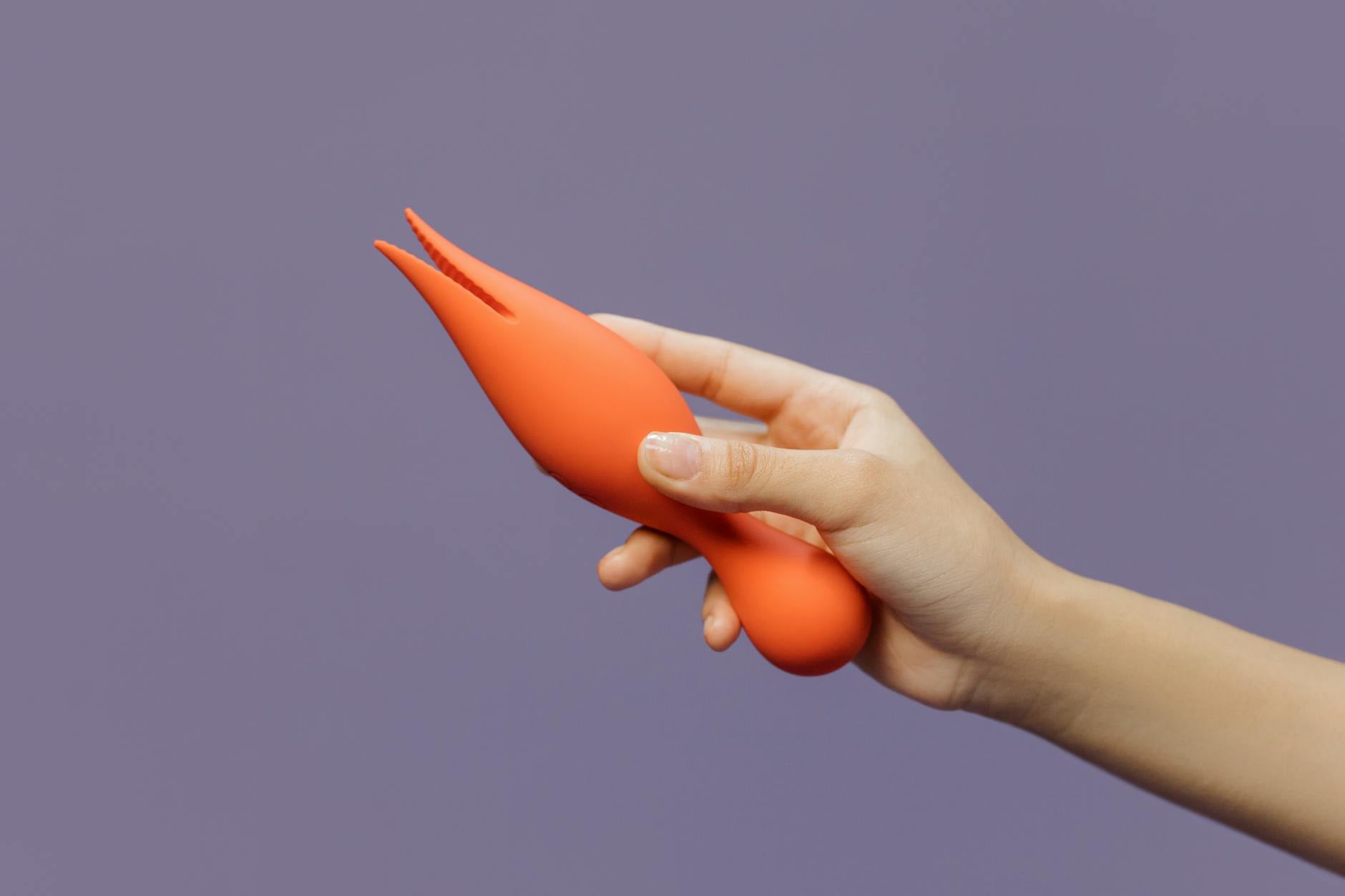
Photo by cottonbro studio on Pexels
If you have a partner, the conversation matters. Anxiety about sex often becomes anxiety about disappointing someone. Explain that you're using a lemon vibrator to help your nervous system settle, not because there's anything wrong with your partnership.
Many couples find that once the anxious partner has rebuilt some confidence solo, introducing the vibrator into partnered sex actually deepens intimacy. Your partner isn't responsible for "fixing" your anxiety. But they can create the safety and patience that lets you do this work.
If your partner doesn't know about the vibrator yet, that's okay. Start with solo use. Once you've felt your nervous system relax through stimulation, the conversation with your partner becomes much easier. You're not asking for understanding. You're sharing a tool that works.
The medication question
Many anxiety medications (SSRIs especially) can actually suppress arousal as a side effect. If you're on medication and finding that anxiety still kills pleasure, that's worth discussing with your doctor. Sometimes adjusting timing, dosage, or medication choice can help.
In the meantime, a lemon clitoral vibrator can still work alongside medication. The nervous system reset you're creating is separate from the medication's neurochemical effects. They're not in competition.
What happens over time
Here's what I've observed across years of clinical work: people don't usually have one experience with a lemon vibrator and then anxiety magically disappears. Instead, pleasure gradually becomes more accessible. You have one session where your nervous system cooperates. Then two. Then three. Each time, it gets slightly easier for your body to trust that it's safe to engage.
This is nervous system retraining, and it takes time. But it's not something you're doing wrong. It's literally your body learning to downshift again.
Many people also find that as they practice this regularly, their anxiety in general starts to soften. Using a clitoral vibrator when you're anxious is proof, over and over, that you can access your body even when your brain is loud. That evidence compounds.
Practical tips for success
Start with a lower suction pattern on your lemon vibrator and stay there longer than feels intuitive. The goal is nervous system reset, not intensity. Use water-based lubricant even if you think you don't need it. Lubrication is a signal to your nervous system that pleasure is welcome. It changes the sensation and the psychological sense of safety.
Set a timer for 15 to 20 minutes and commit to that duration without checking whether anything is "working." Just let sensation happen. If you get an orgasm, great. If you don't, the parasympathetic activation you've created is still valuable work.
Don't use a lemon vibrator when you're actively in crisis or having a panic attack. Use it when anxiety is background-level but still blocking arousal. The tool works best when your nervous system is already partway willing to shift.
Keep your phone across the room so you're not tempted to scroll or check messages. Anxiety loves distraction, and your brain will use it to pull you back into high alert.
FAQ: Anxiety and lemon vibrators
Can a lemon vibrator actually reduce anxiety long-term?
A single session won't cure anxiety. But regular use trains your nervous system to recognize that physiological downshift is possible. Over weeks or months, your baseline anxiety often softens because you have repeated evidence that you can access your parasympathetic system. This is not a substitute for therapy or medication if you need those things. It's a tool that works alongside them.
What if I use the vibrator and feel nothing at all?
That's dissociation or deep numbness, and it's common with anxiety. Instead of increasing intensity (which can make dissociation worse), stay at the lowest setting longer. Sometimes it takes 20 to 30 minutes for sensation to break through when your nervous system has been locked down. Patience is the intervention here, not more stimulation.
Does it matter whether I use a lemon clitoral vibrator versus something else?
The consistency and rhythmic pattern of suction (which air-pulse devices like the Lem offer) is particularly effective at triggering the vagal brake. Vibration-only devices work too, but many people find suction more grounding when anxiety is the issue. The predictability of the pattern helps quiet an anxious mind.
What if anxiety around performance interrupts me even solo?
Then you're dealing with internalized pressure, which is common. Before using a vibrator, try this: spend five minutes just touching your clitoris without any device. No pressure to feel anything. Just exploration. This helps you separate "touching myself" from "performing." Then add the lemon vibrator once that pressure has lightened a bit.
Can I use a lemon vibrator if I'm on anxiety medication?
Absolutely. The nervous system reset you're creating through stimulation is neurologically distinct from medication. They work on different systems. If your medication is suppressing arousal, that's a separate conversation with your doctor. The vibrator still helps retrain your nervous system to be capable of downshift.
How often should I use a lemon vibrator if anxiety is my main barrier?
Start with two to three times per week. Regular use (not daily) helps your nervous system build confidence that pleasure is accessible. Daily use can become goal-oriented, which defeats the purpose. Consistency matters more than frequency.
The point
Anxiety doesn't mean you're broken. It means your nervous system is doing its job too well. A lemon vibrator isn't a cure for anxiety. It's a reset button for your parasympathetic system and proof, over and over, that your body still works when your brain finally lets it. That evidence compounds. Start small, stay patient, and let your nervous system teach you again what downshift feels like.