The moment everything shifts
You're in bed with your partner. Foreplay feels good. But when it comes time for the main event, something's off. Your clitoris isn't responding the way it used to. Either the sensation is duller, or it takes longer to build, or the angle your partner's providing just doesn't land the same anymore. And suddenly, what used to feel effortless now requires a conversation you're not sure how to start.
Here's the thing: this is wildly common, and it's not a sign your relationship is broken. It's a sign your body and your partnership both deserve an upgrade.
Why clitoral sensation changes during partnered sex
There are roughly five reasons this happens, and none of them are your fault.
Position and angle matter more than we admit. When you're flying solo with a vibrator, you have total control of pressure, angle, and speed. With a partner, you're negotiating two bodies at once. The angle that made you come every time solo might not translate when someone else is involved. Penetration can also shift where clitoral contact happens, meaning the exact spot that needs stimulation gets less direct attention.
Arousal architecture is different. Self-directed arousal is linear. Partner-directed arousal is collaborative, which means there's a negotiation happening in your nervous system between your own pleasure pathway and your partner's presence, rhythm, and touch. That split attention (even when it's welcome) is neurologically different from solo exploration.
Sensation fatigue is real. If you've been using a lemon vibrator solo for weeks or months, your clitoris has learned those patterns intimately. When your partner tries to replicate it with their fingers, tongue, or body, it simply doesn't match the precision or consistency. This isn't numbness. It's specificity. Your nervous system knows what it's been training on.
Lubrication and friction change the game. Without consistent lubrication, the angle and pressure needed shifts. With a partner, lubrication dynamics are different than with a toy. Saliva dries. Bodies move. The continuous glide you get with a vibrator and water-based lube is hard to maintain with skin-to-skin contact.
Attention is divided. You're managing pleasure, connection, your partner's pleasure, the logistics of the position, breathing, eye contact. Solo, you're managing pleasure and nothing else. That difference in cognitive load is subtle but real.
The lemon vibrator as a bridge, not a replacement
When I work with couples navigating this, the conversation usually starts with shame. "I feel broken." "He thinks I'm rejecting him." "We never needed toys before."
Let me be direct: a lemon clitoral vibrator isn't evidence of failure. It's evidence of honesty. You're saying, "Here's what my body actually needs right now." That's the foundation of good partnered sex.
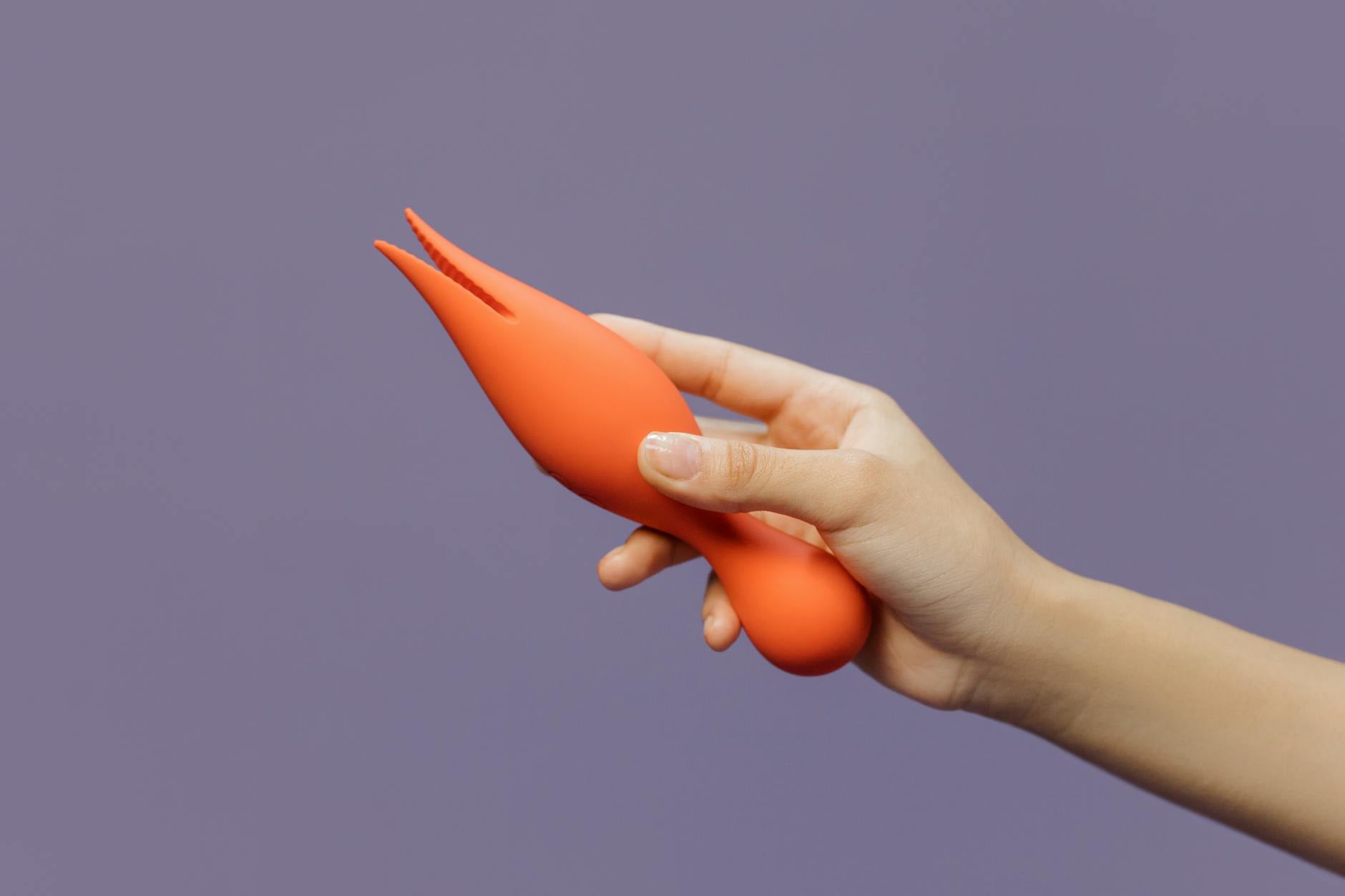
A lemon vibrator, specifically, works better than most toys for partnered pleasure because the suction mechanism doesn't require the same direct friction that can feel overwhelming or numb when you're already in a sensitive state. You can use it during foreplay without stopping penetration. You can hold it yourself or let your partner operate it while you focus on connection.
The key is positioning. The lemon vibrator is external and hands-free (or partner-operated). That means your partner can still be inside you, still have skin-to-skin contact on other parts of your body, and you still get the precise stimulation your clitoris needs. It's not replacement. It's addition.
The conversation framework that works
Before you bring a lemon vibrator into partnered sex, you need to frame it right. Here's what has worked for my clients.
Start outside the bedroom. Don't spring a vibrator on someone mid-sex. Have a conversation over coffee or a walk. "I've noticed my body is responding differently lately during sex, and I want to find ways we can both feel good. I'm thinking a clitoral vibrator might help me get there faster, which means more pleasure for both of us."
Notice the framing: it's about your pleasure, your body, not about them failing. You're not saying, "You're not making me come." You're saying, "My body's changed, and here's what might help."
Lead with curiosity, not criticism. "I've been thinking about trying something new" is better than "What we're doing isn't working." The difference is massive psychologically.
Make it collaborative. Ask your partner if they want to operate the vibrator, or if they'd prefer you do it. Ask where they want to be positioned. Ask what rhythm works for them. This isn't something happening to your partner. It's something happening with them.
Emphasize the upside for them. Good partnered sex with a lemon vibrator means you get there faster and harder, which means more confidence for your partner, more pleasure for you, less performance anxiety for both of you, and more time for everything else you both enjoy. That's not a compromise. That's an upgrade.
The mechanics that actually work
Once you've had the conversation, here's how to integrate a lemon vibrator into partnered sex without it feeling awkward.
Use it during foreplay. Don't wait until penetration. Start with the lemon vibrator during kissing, touching, and early arousal. This primes your nervous system and gets you closer to the edge before penetration happens. Your partner can watch, touch you elsewhere, kiss you. The vibrator is doing one job. They're doing the rest.
Find the rhythm that works for both of you. Some couples do slow penetration with consistent vibrator stimulation. Some do faster thrusting with the vibrator on a lower setting. Some use it during the buildup and then turn it off for penetration. Experiment. There's no one way.
Angle and positioning matter. If you're on your back, the lemon vibrator presses against your clitoris while your partner is inside you. If you're on top, you can angle the vibrator differently and control the pressure yourself. Try positions and find what lets you hold or balance the vibrator without it feeling precarious.
Communicate in real time. "A little higher." "Faster." "Keep that exactly." This isn't unsexy. This is information. Your partner wants to know what works. Tell them.
Consider battery life and grip. A lemon vibrator has good runtime, but midway through sex isn't the time to run out of charge. Check before you start. And make sure you or your partner can hold it comfortably. Wet hands slip. Know your grip strategy.
When it clicks and what happens next
Somewhere in this process, something will shift. You'll feel your body respond. Your partner will notice you relax. The sensation will arrive in a way that wasn't happening before. And suddenly you're both in sync again.
What changes isn't just the sex. What changes is the conversation. Once you've integrated a lemon vibrator into partnered pleasure, you've already solved a bigger problem: you've normalized talking about what your body actually needs. You've made pleasure a collaborative thing instead of a performance.
Most couples who add a vibrator to their sex life find that sex improves across the board. Not because the vibrator is magic. But because you're both paying closer attention. You're communicating. You're willing to adapt.
Common questions couples ask
Will my partner feel threatened by the vibrator?
Some do, briefly. What helps is framing it as a tool that lets you both enjoy sex more, not as evidence they're not enough. A partner who's secure will see a vibrator as an ally, not competition. If your partner remains threatened after you've explained the benefits, that's worth exploring in a deeper conversation about insecurity, not about whether you "should" use a vibrator.
Can I use a lemon vibrator if my partner has a penis?
Yes. The lemon vibrator works externally on your clitoris, so it's compatible with penetrative sex regardless of your partner's anatomy. In fact, many couples find this is the easiest way to ensure you both orgasm during partnered sex.
What if I can't orgasm even with the vibrator during partnered sex?
That might mean you need more time, less pressure, or a different position. It might also mean you orgasm better solo and that's okay. Not every sexual encounter needs to end in an orgasm for it to be good. Sometimes the goal is connection, not climax. Talk to your partner about what success looks like for both of you.
Is it weird to use a lemon vibrator during sex with a new partner?
Not if you communicate it first. By the time you're considering partnered sex, you've usually had enough conversations to say, "I use a vibrator to reach orgasm, and I'd like to try it with you." A partner who's turned off by that isn't a good match anyway.
How do I clean the vibrator after partnered sex?
Water and mild soap. Rinse thoroughly and pat dry before storing. If there's any bodily fluid on it, wash immediately. Some people use a toy cleaner, which is fine, but soap and water work perfectly well. Refer to the care guide for specifics on your lemon vibrator model.
What if my partner wants to use it on me but I'm not sure about that?
Start by using it yourself while your partner watches or touches you elsewhere. Once you're comfortable, try them operating it on a low setting while you guide them. Not everyone wants a partner holding the vibrator, and that's valid. You can always take it back.
The deeper shift
Integrating a lemon vibrator into partnered sex isn't really about the vibrator. It's about agreeing that your pleasure matters enough to be specific about. It's about saying, "Here's what my body needs," without apology. It's about your partner saying, "Tell me how to help."
That conversation, more than any toy, is what deepens intimacy. Everything after that is just logistics.
If you want more specific guidance on communication or positioning, our contact page has resources for couples navigating pleasure conversations. And if you're exploring this solo first, our buying guide walks you through choosing the right Hello Nancy vibrator for your body.